Year
2024
Client
BlastUP
Category
Web3 · IDO Platform
Product Duration
4+ weeks
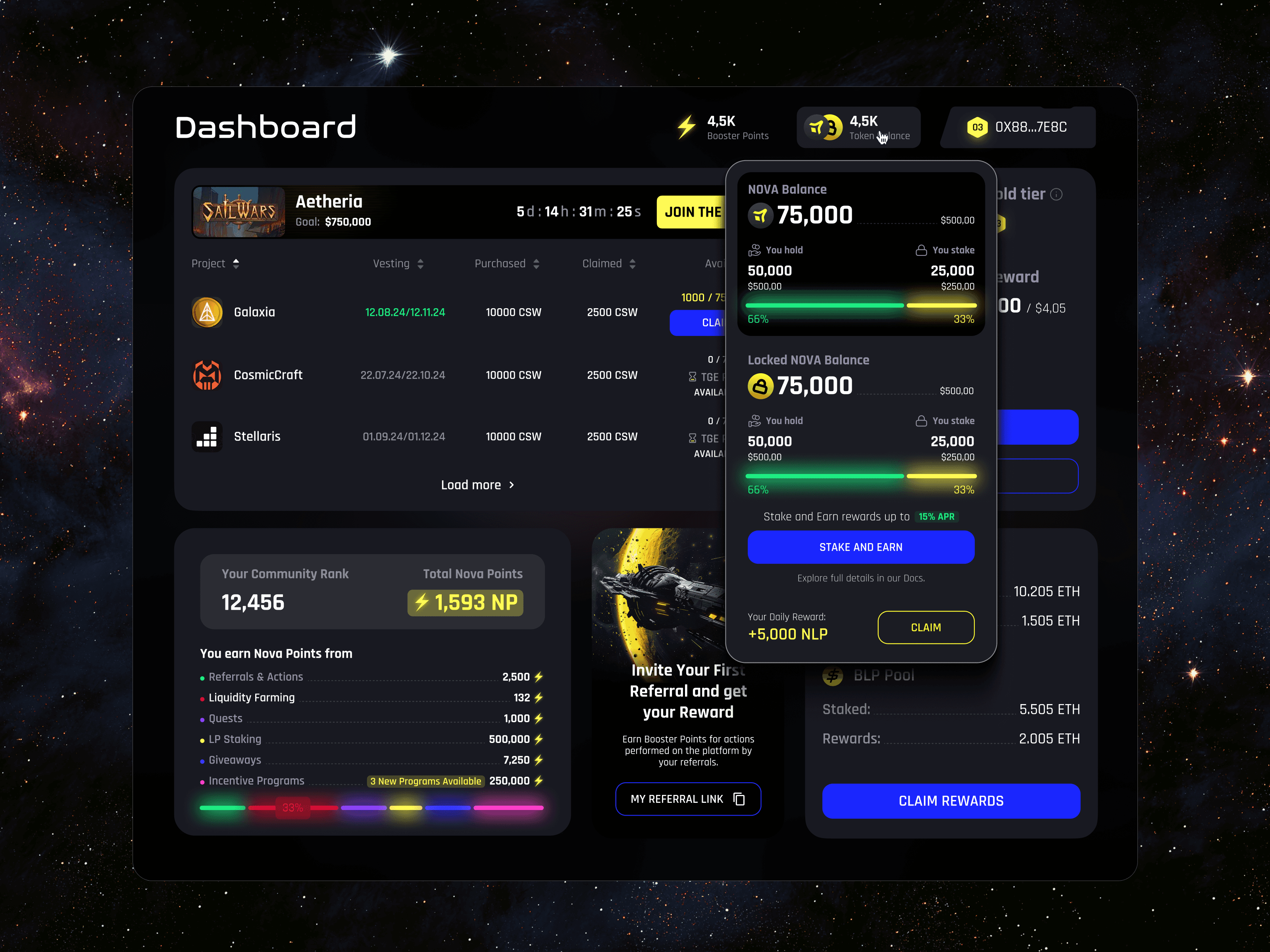
BlastUP had designers. Working product, live economy, everything functional. But the co-founder knew us, and specifically knew that the kind of problem he had — structurally complex, full of technical constraints that create UX dead ends — was the thing we're unreasonably good at. For the hard stuff, they came to us.
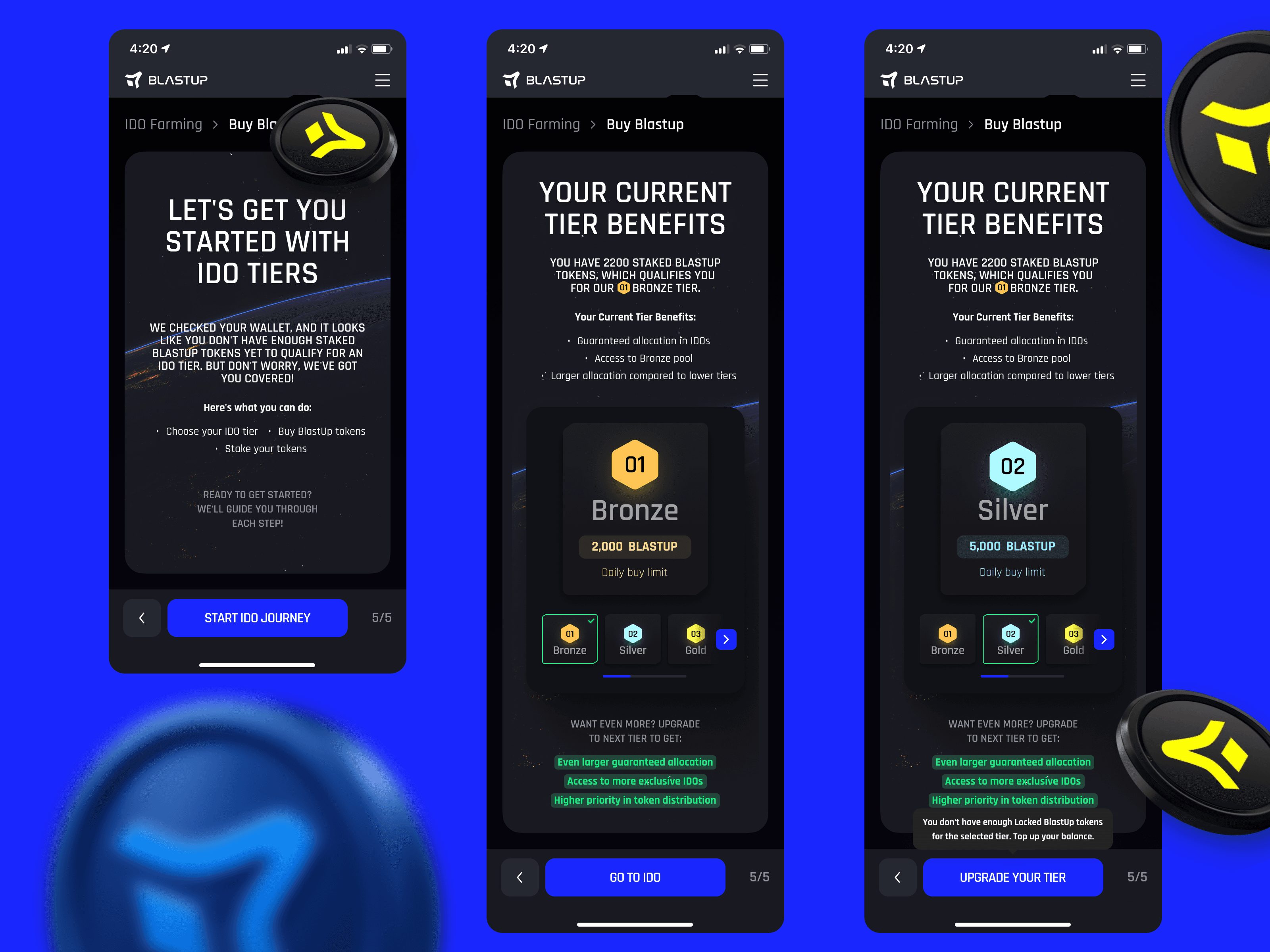
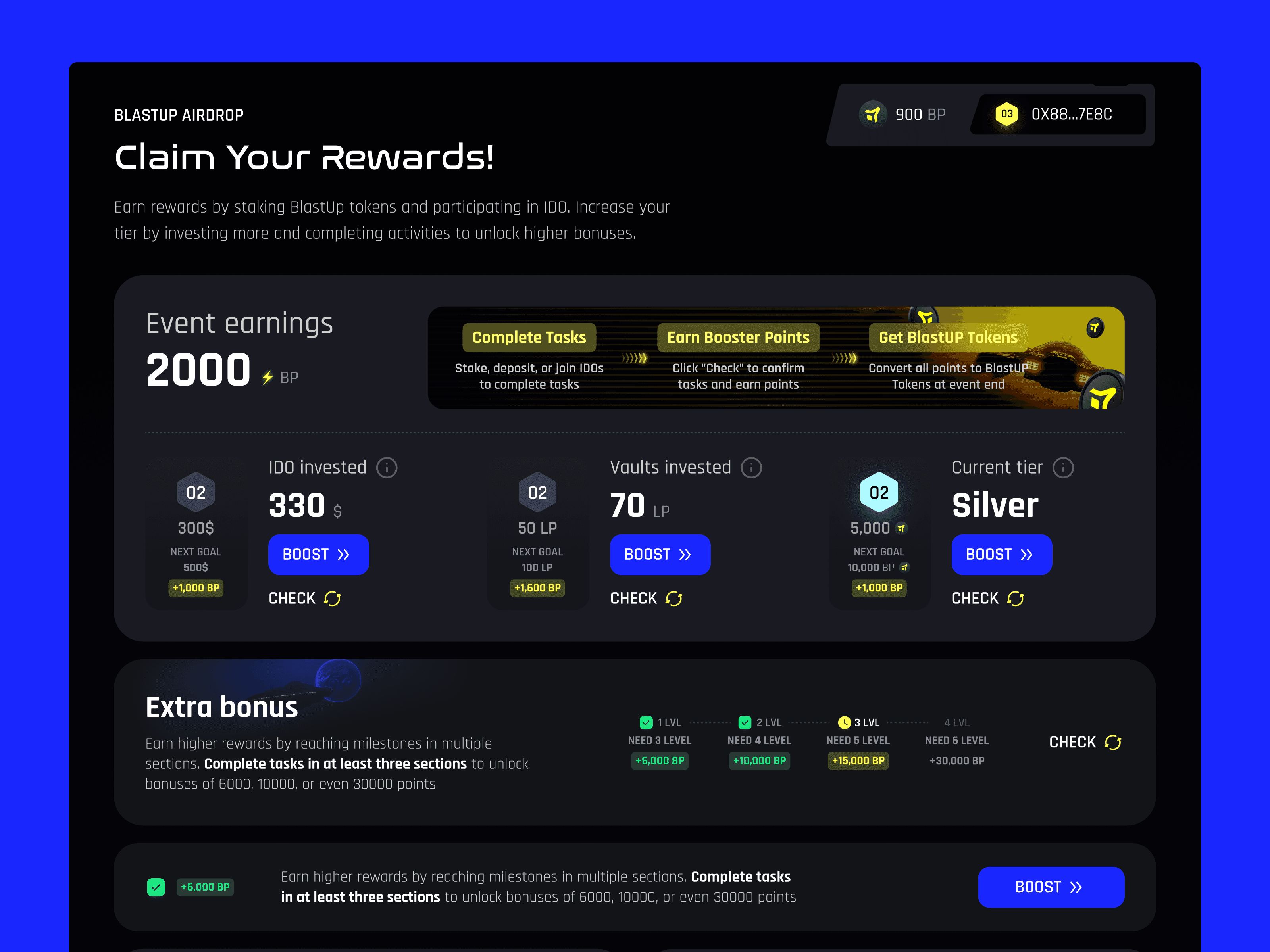
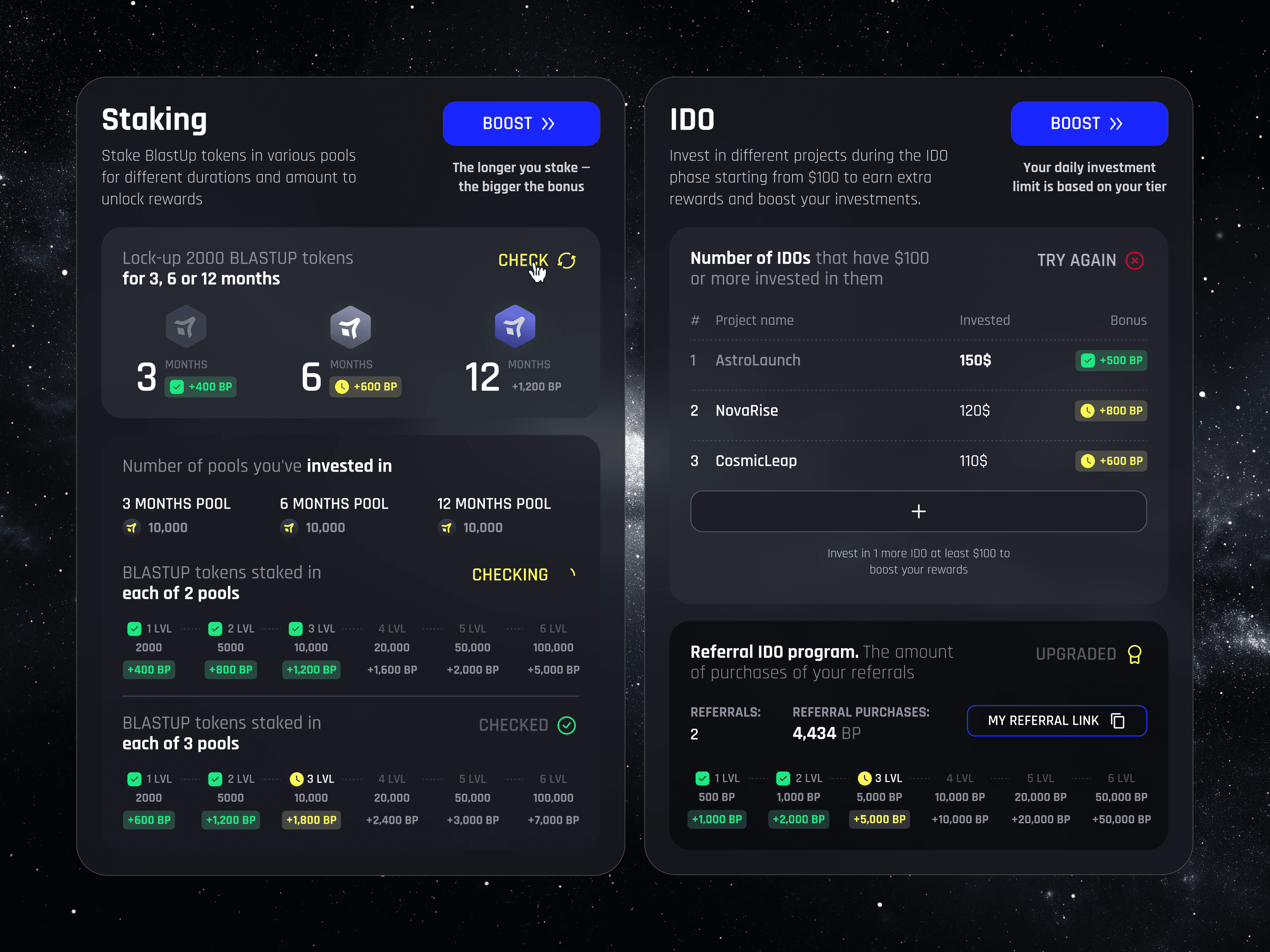
Road to IDO: a flow that takes a user from knowing nothing to having staked tokens and an IDO allocation, through wallet connections, a tier system nobody's heard of, fiat and crypto payment options, gas fees that technically have to be a separate transaction, and a third-party widget that looks like it might be a scam if you don't frame it right. The brief was a Notion document — two pages of continuous text, no states, no edge cases, no UX thinking. Everything else was our problem.
There's a curly little arrow — decorative, does a little loop before pointing at something — that was first drawn by Vlad Pochukalin, the founder of a studio I used to work at. It's been migrating from file to file for four years now. It's not that I'm copying an arrow. It's that every project deposits things into a shared library — patterns, components, micro-decisions — and over time that library is why we work fast.
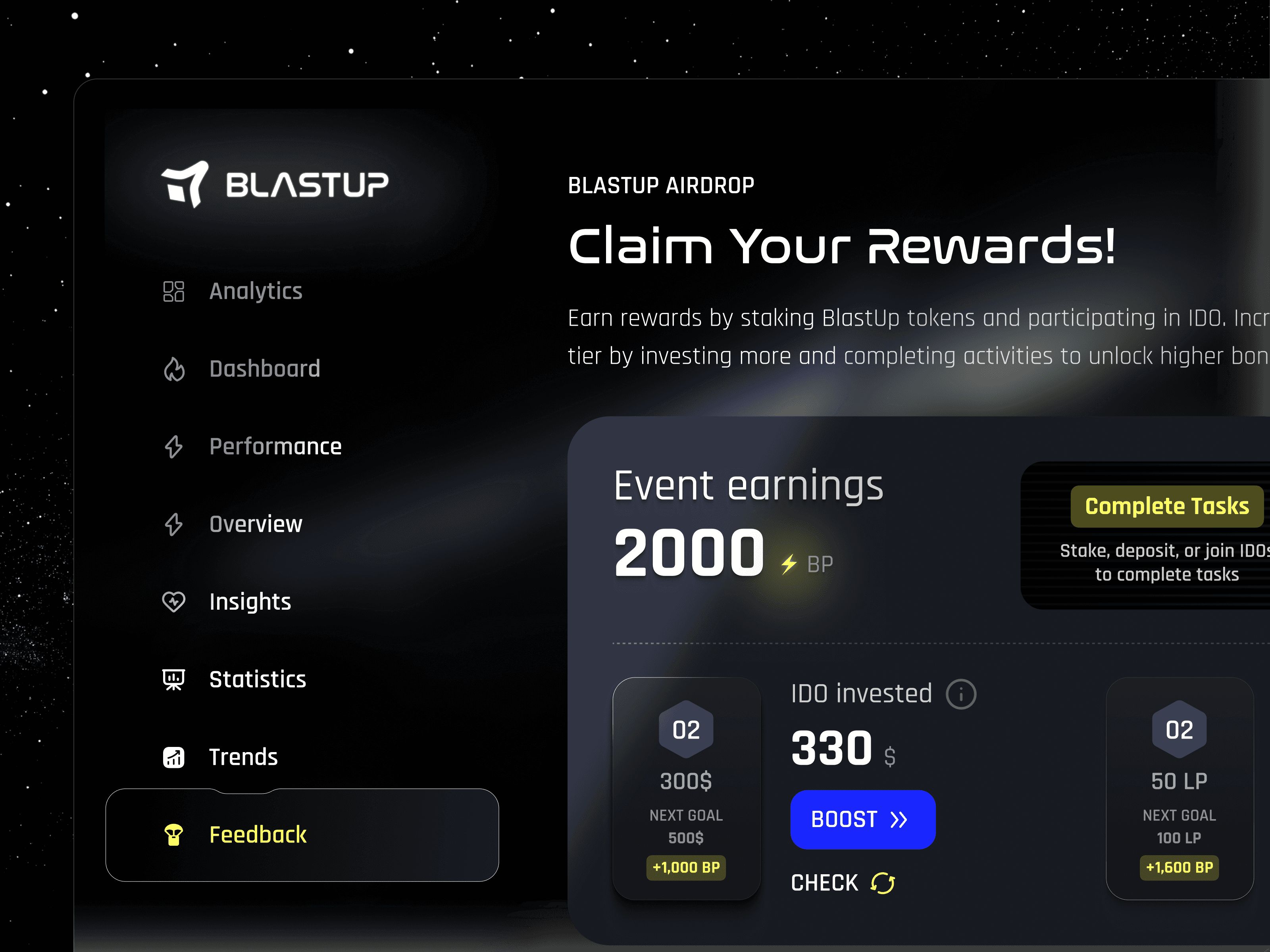
For BlastUP, the deposit that mattered came from EZ Wallet: an onboarding architecture where dynamic contextual guidance lives on the left, actual actions on the right, and the seam between learning and doing doesn't exist. When we looked at Road to IDO, that principle was exactly right. We didn't copy the screens. We took the idea and rebuilt it from scratch.
Normally we don't need three weeks to think about UX on a crypto product — we've shipped enough of them that the UX is, frankly, trivial. The visual layer is where the actual craft lives.
BlastUP was the inverse. The visual layer came together in about a day and a half. The flow logic took weeks, because every path through the system branched into states we hadn't anticipated, and every missed state was a user hitting a wall with money already committed.
Marie and I started by building something that looked like garbage — pieces from Kibra, NearWallet, Untitled UI, the Münzen widget, a complete Frankenstein. But the structure underneath worked. Marie went through every screen leaving comments that read less like annotations, more like dispatches: here's what this element does, here's what breaks if you remove it. We showed this beautiful disaster to the client, they approved the logic, and only then did we start making it look like something.
The split: early architecture was 70/30 my direction — structural logic, crypto mechanics, which constraints were hard limits and which weren't. Mid-stage and the entire UI flipped to Marie. She built most of what shipped. She's not an assistant on these projects. She's a co-author.
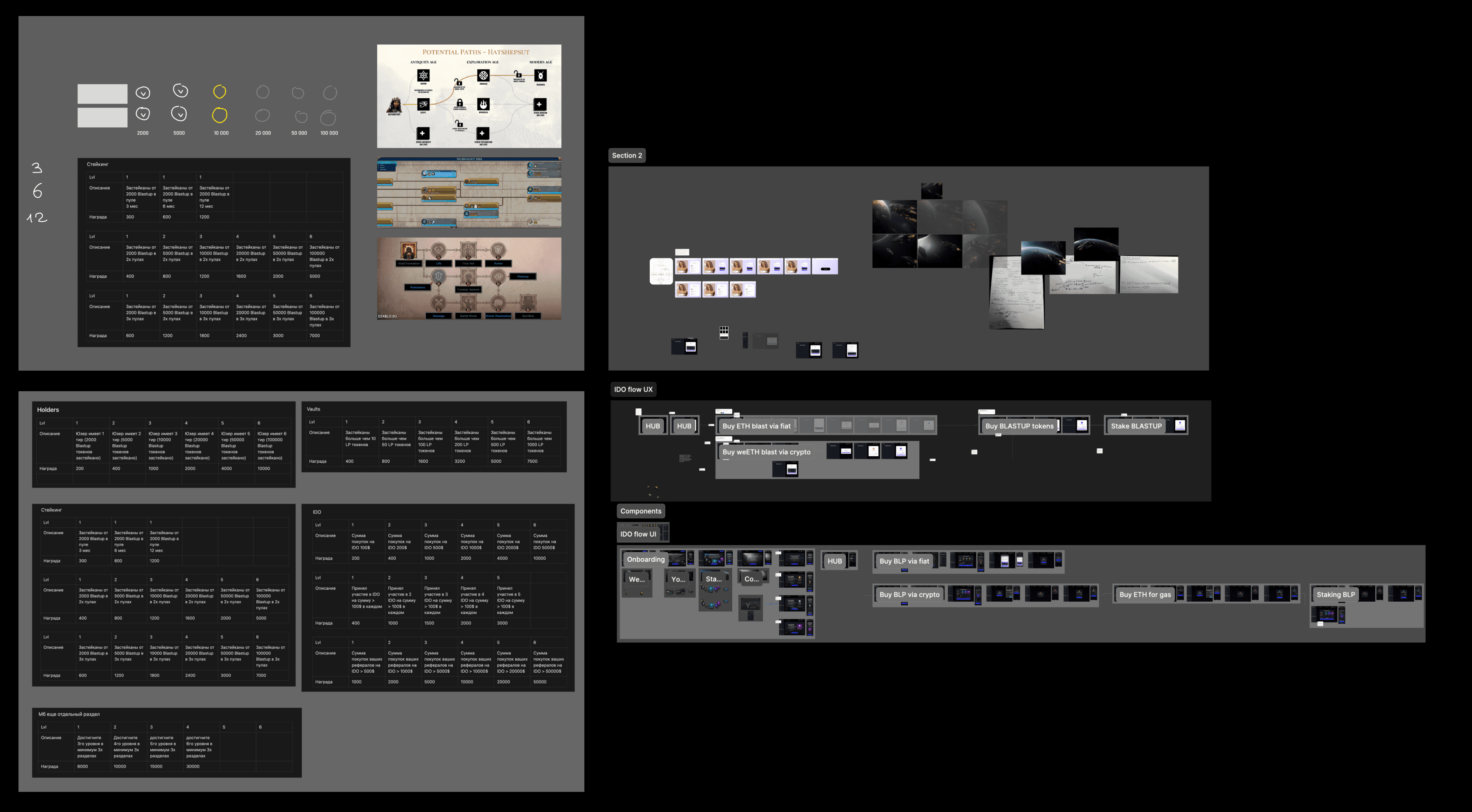
The thing that cut drop-off by 40% is hard to point at — it's not a feature, it's the choice to not have a boundary between onboarding and participation at all.
Standard flow: onboarding ends, real flow starts, user hits a natural exit point — I've learned enough, I'll come back later. What we built: five steps where the first three are clearly onboarding — tiers, allocation, UI elements introduced early so they're familiar when they show up for real. Step four looks like onboarding. Same layout, same pacing, same button position. It is not onboarding — you're already in the IDO participation flow. Step five: “Connect wallet” appears in the exact spot your thumb has been tapping for four screens.
Nobody decides to participate. They just never encounter a moment that asks them to decide.
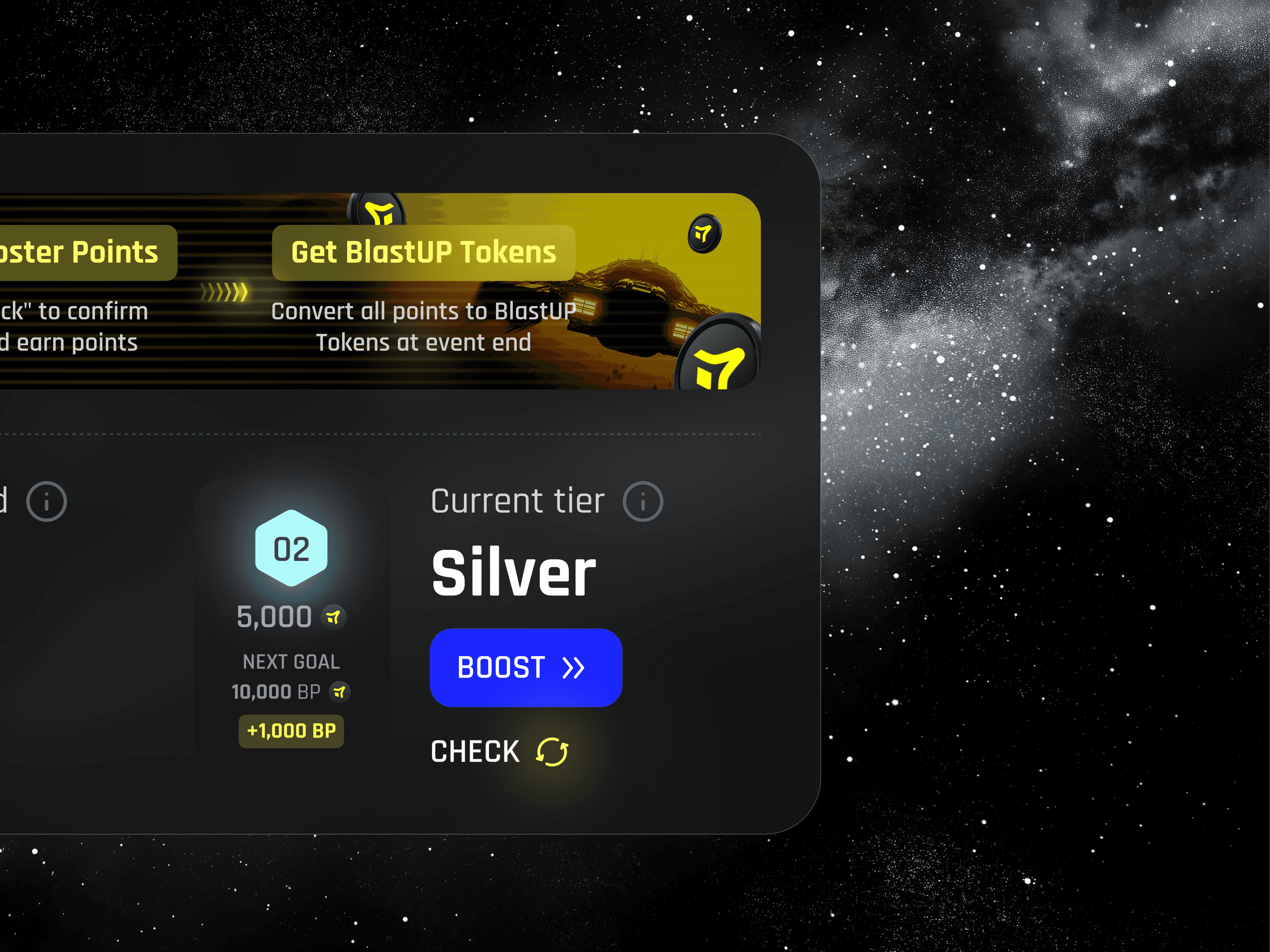
The same principle runs through everything after: payment method as a modal, not a full page — because a full page communicates weight, and the last thing you want at that moment is a layout whispering “maybe stop and reconsider.” Tier upsell as live contextual info calculated from your staked balance, not a popup. Gas fee pre-warned one screen early, then framed as context rather than an obstacle — and because you're already in a paying mindset, a quiet note that your tier is upgradeable.
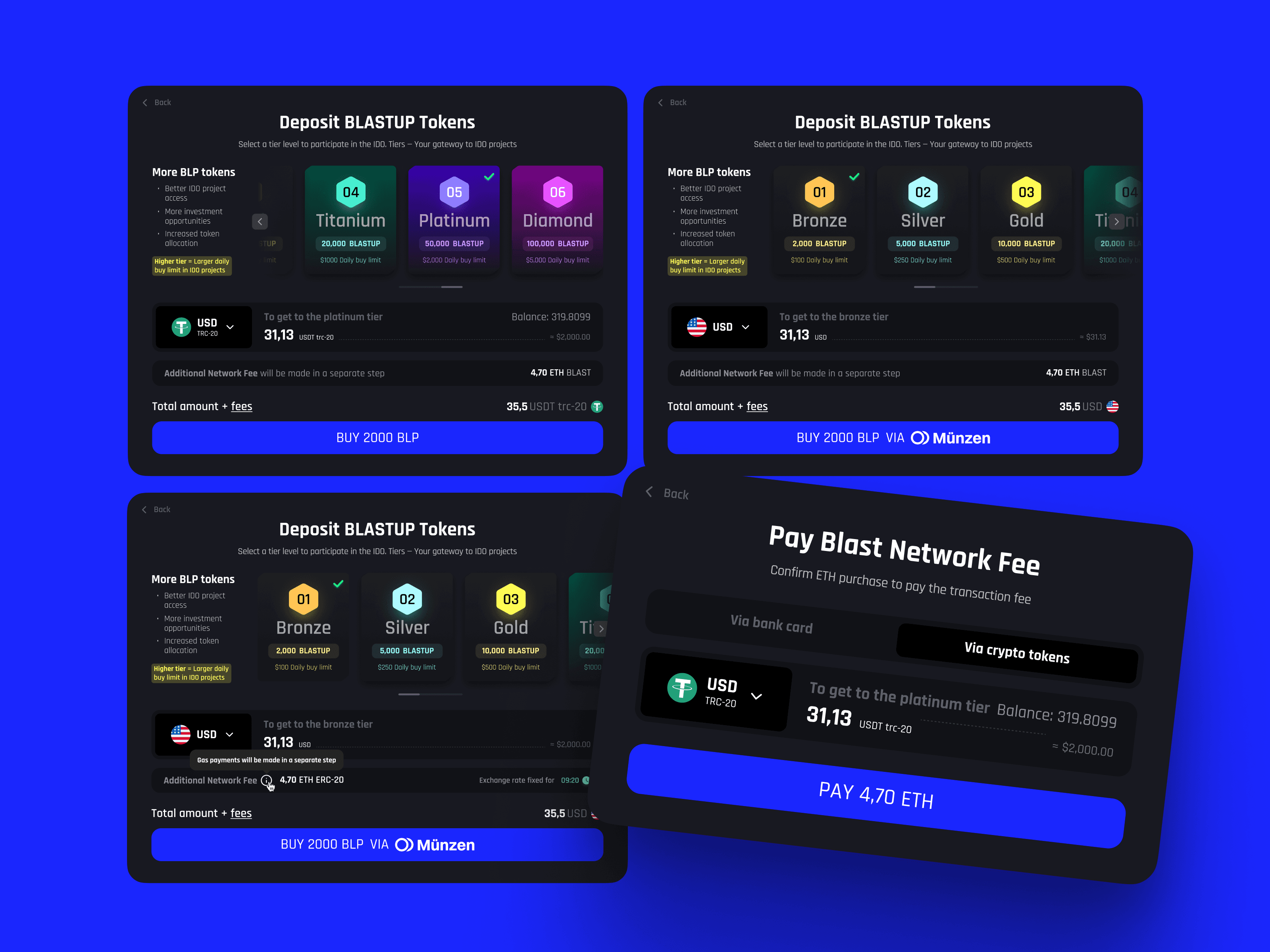


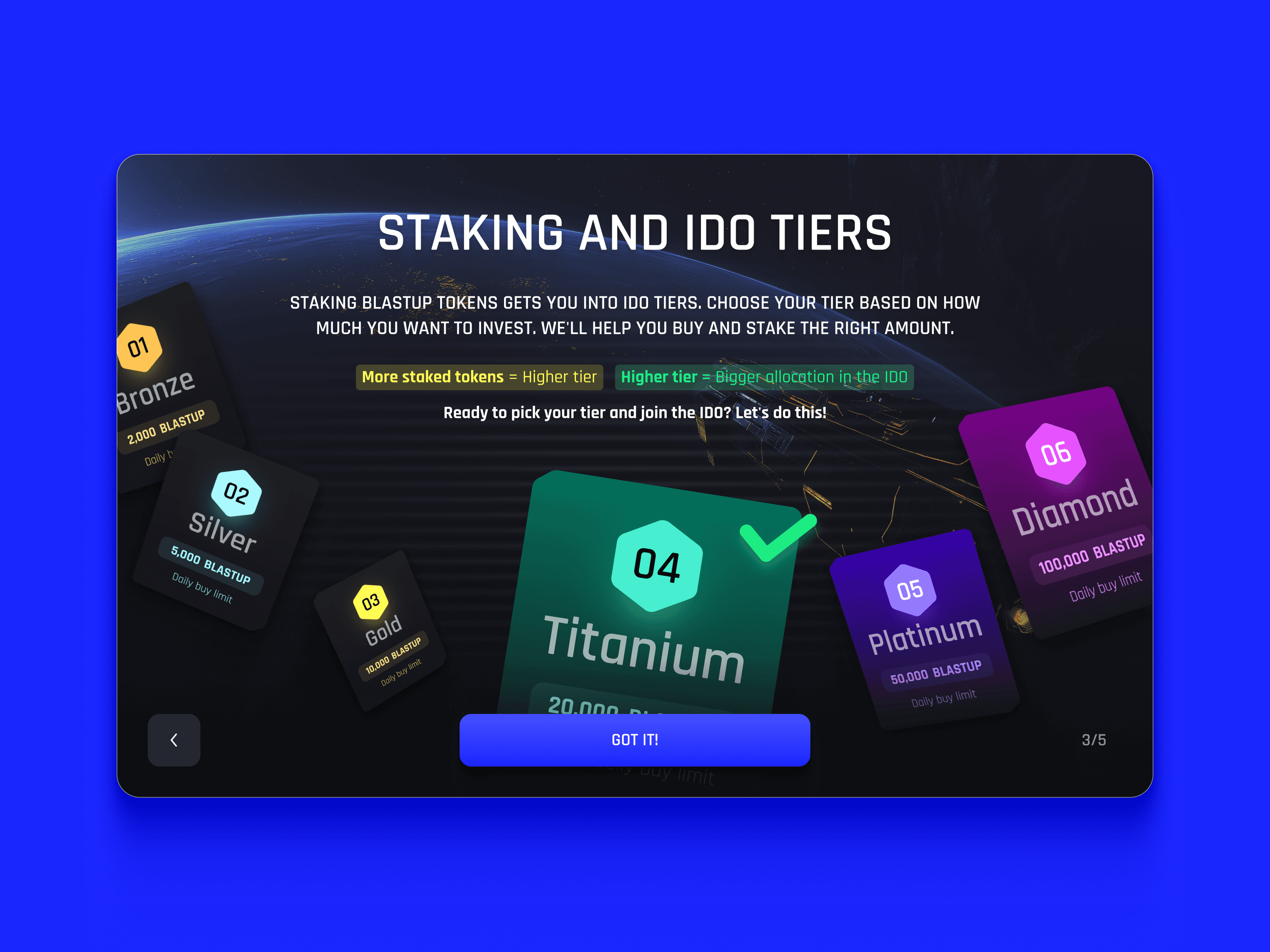
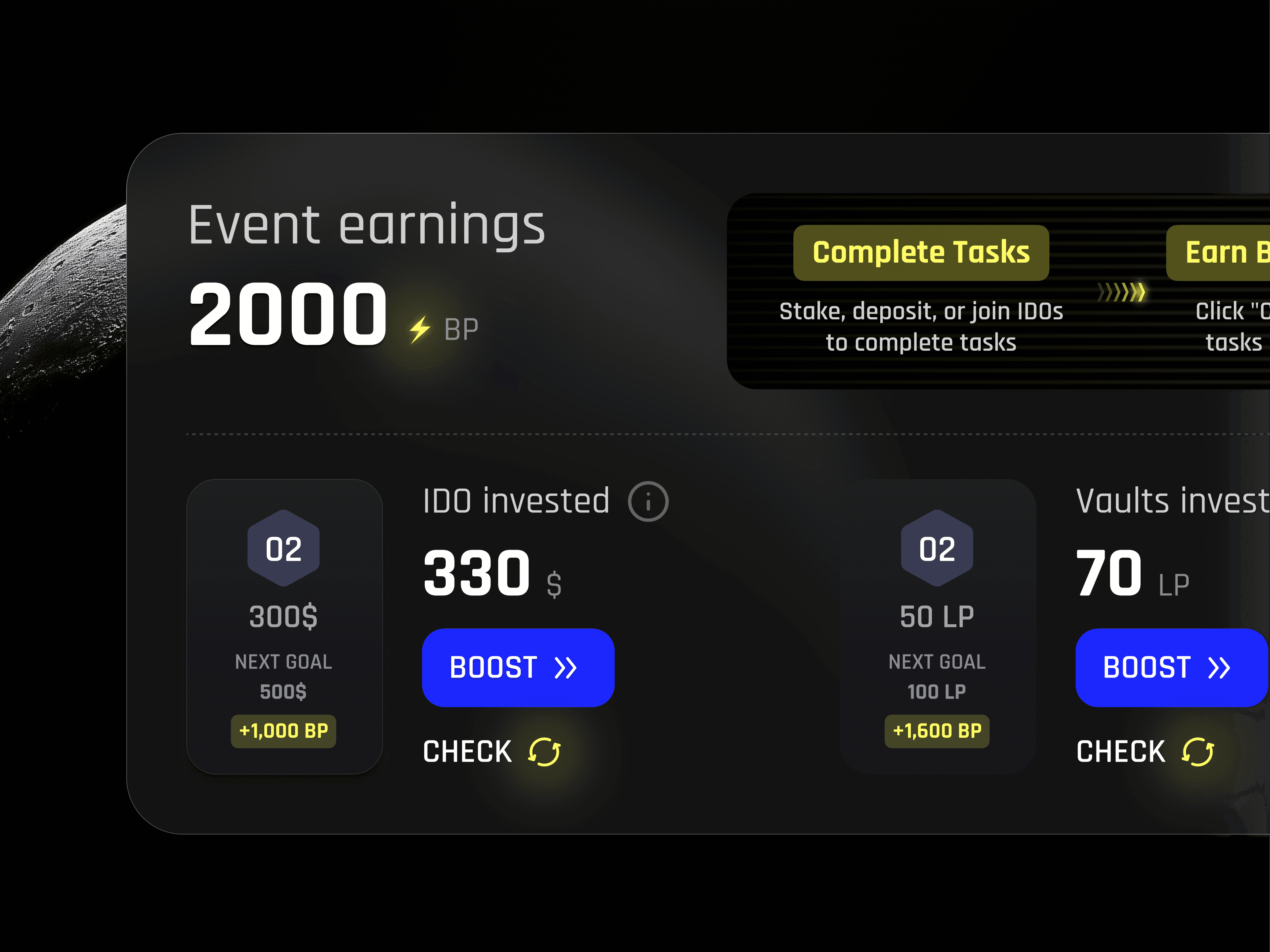
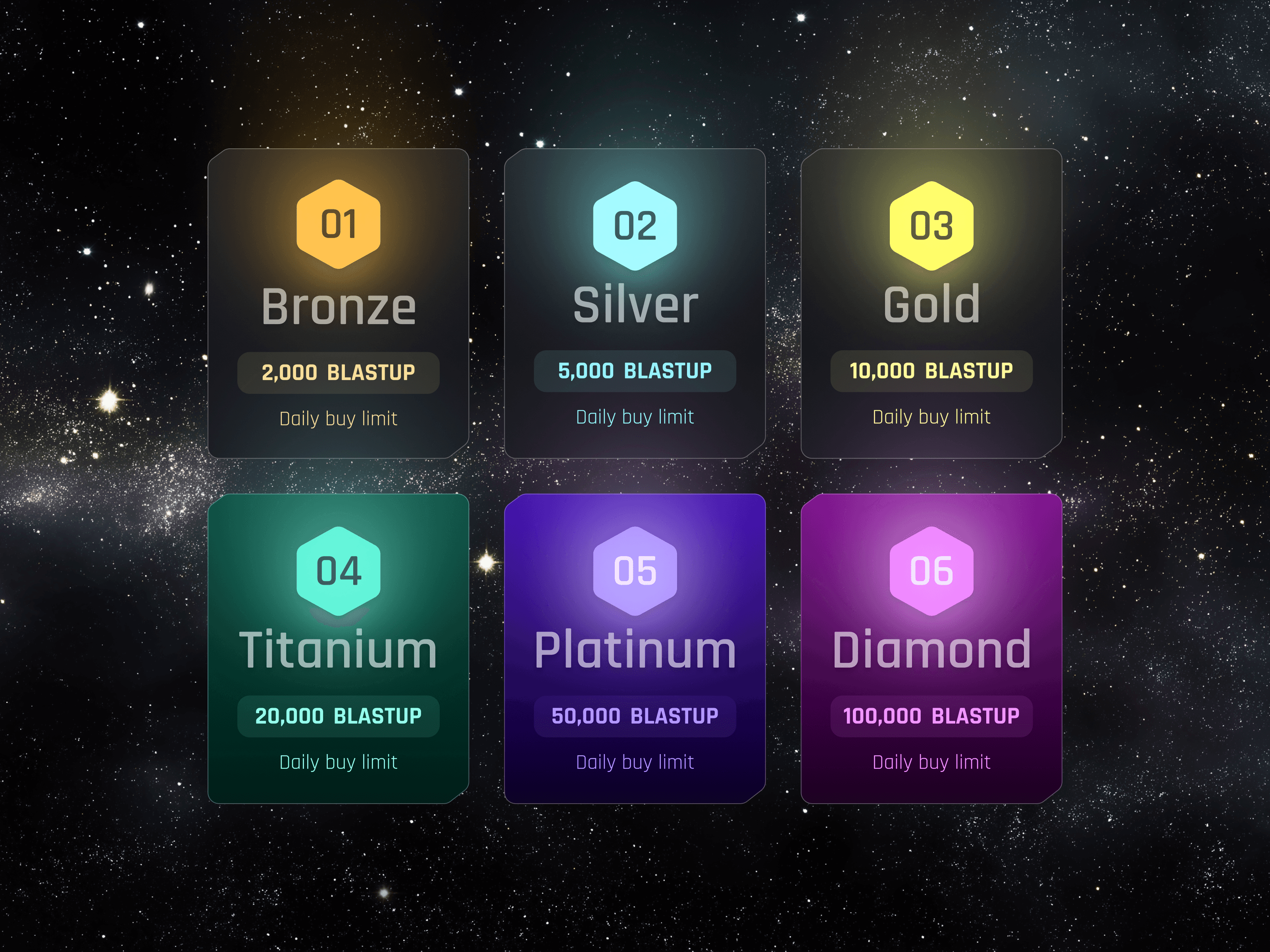
The cyberpunk glow and volumetric tier cards, the shadows that make them feel like physical objects you're picking up rather than flat images you're selecting, the payment operator logo embedded directly in the action button so you know who's processing your money before you tap, the redesigned token-and-network selector — all of this is real craft, and all of it affects conversion. In crypto, visual confidence is spending confidence. NFTs that cast shadows and interact with their environment sell better on marketplaces than flat ones. Same psychology, applied to every interactive element in a payment flow.
But it was a day and a half of work on top of weeks of structural thinking, and I think that ratio — not the screens themselves — is the thing worth remembering about this project. The product that shipped looks clean and professional and glowy. The product that actually works, the one that reduced drop-off by 40%, is invisible. It's the architecture underneath — which screen comes when, what information lives where, which moment feels like a pause and which feels like momentum, and the precise point at which onboarding stops being onboarding and starts being the thing itself, which is a point that, if we did our job right, nobody can find.