
Year
2025
Client
Arkada
Category
NFT Collection / Web3
Product Duration
7 months
Most NFT collections are a character design sheet fed through a combinatorial script — ten hairstyles, eight backgrounds, six accessories, shuffle, mint ten thousand. The creative work is the character. Everything after that is automation.
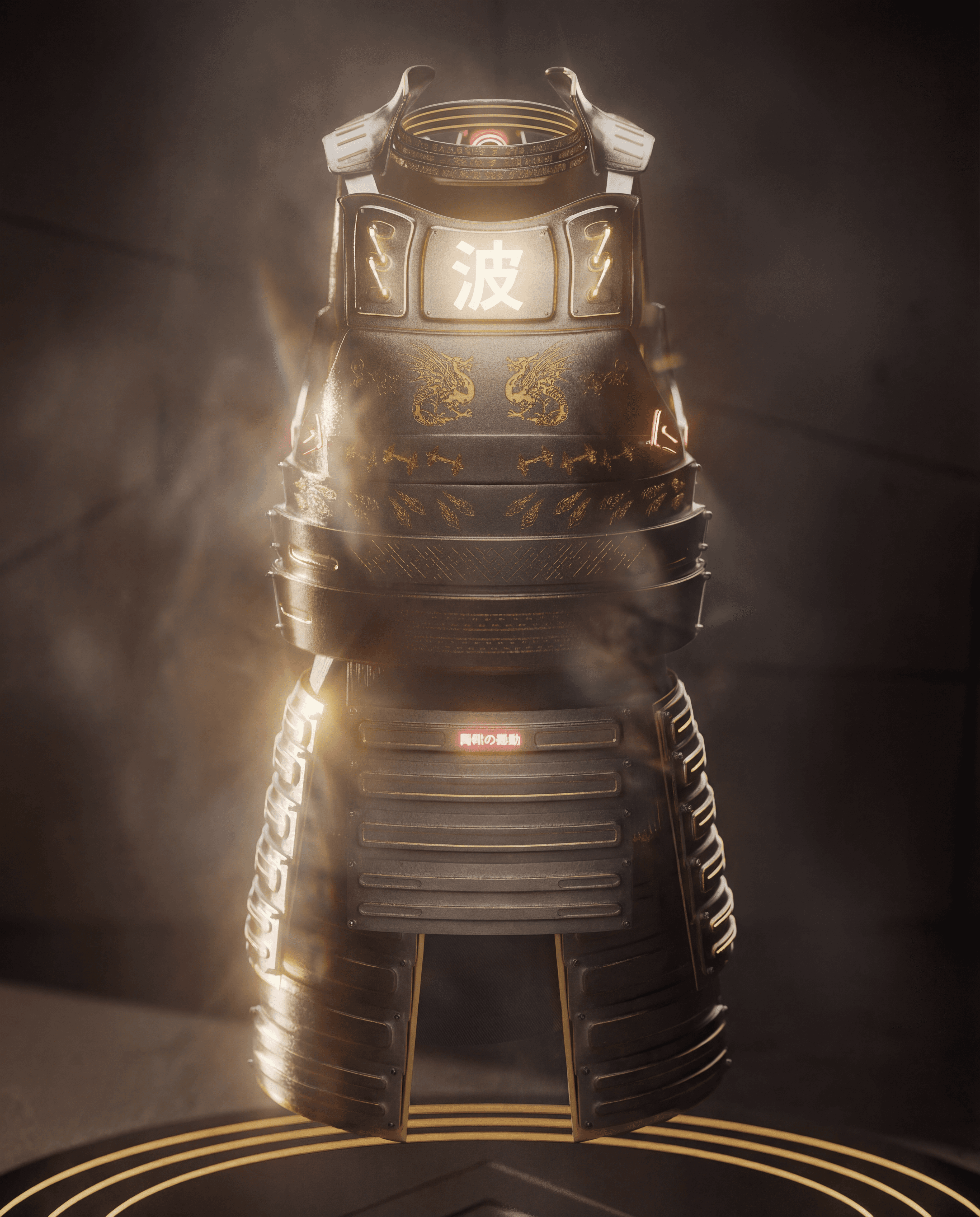
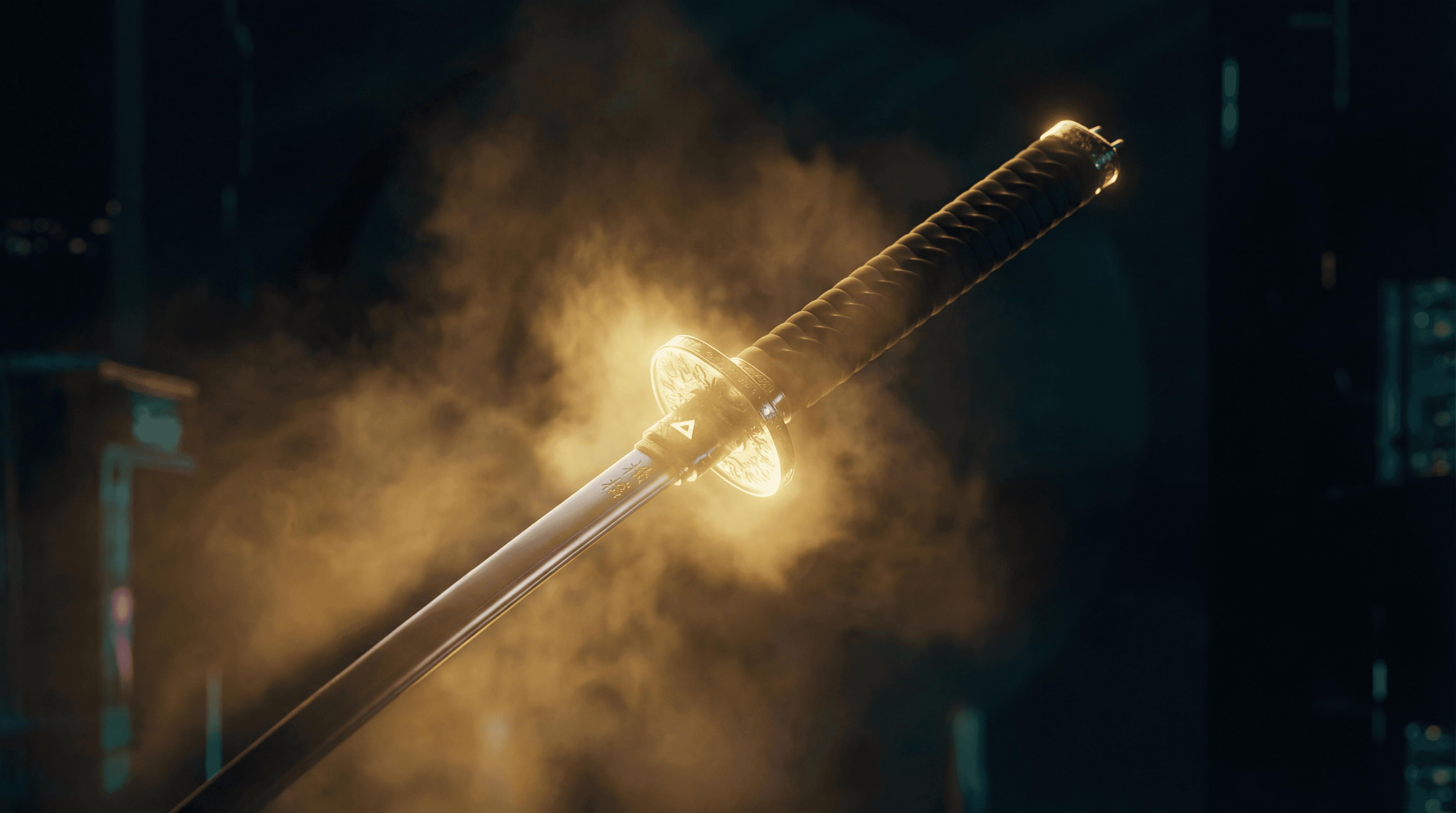
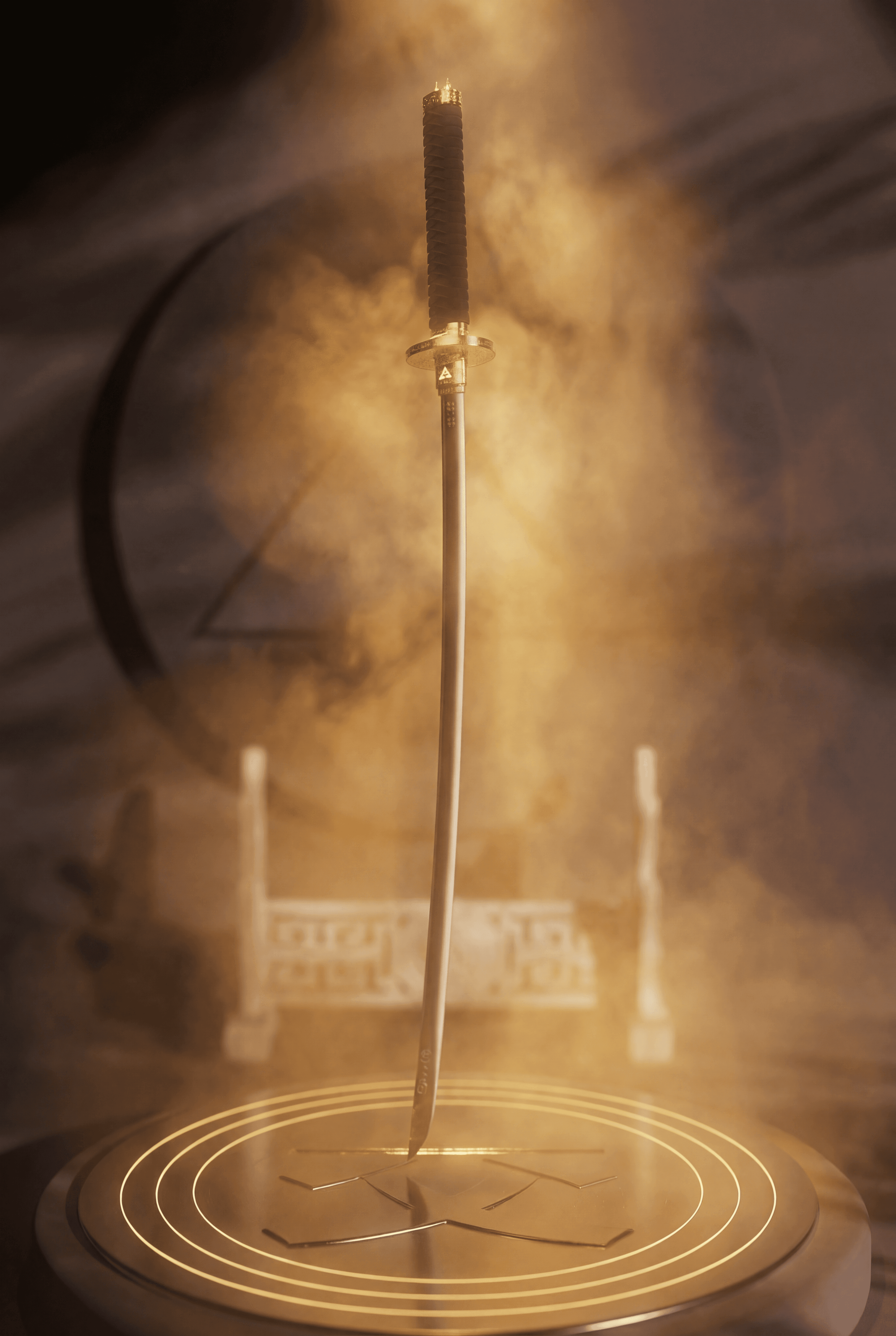
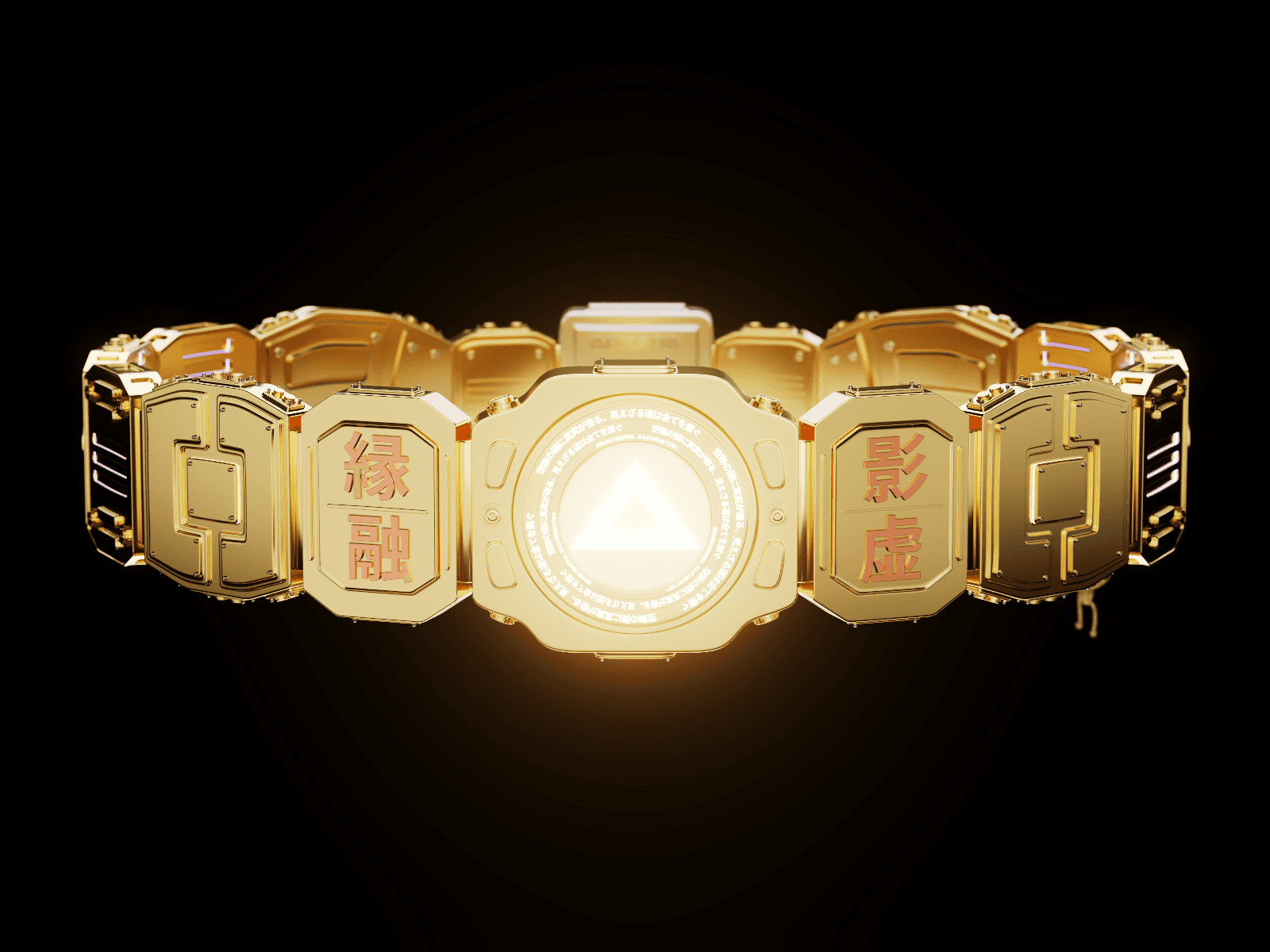
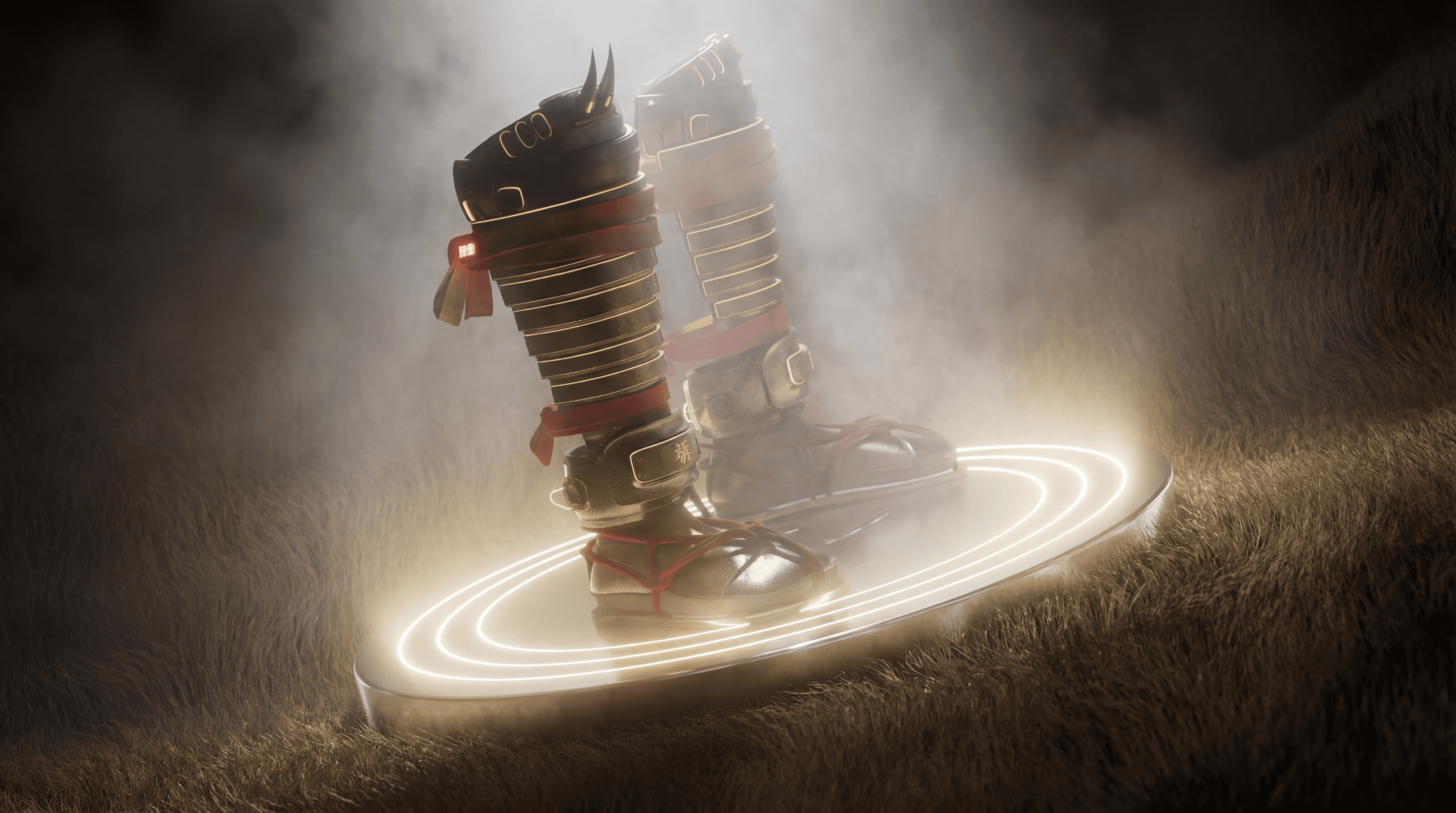
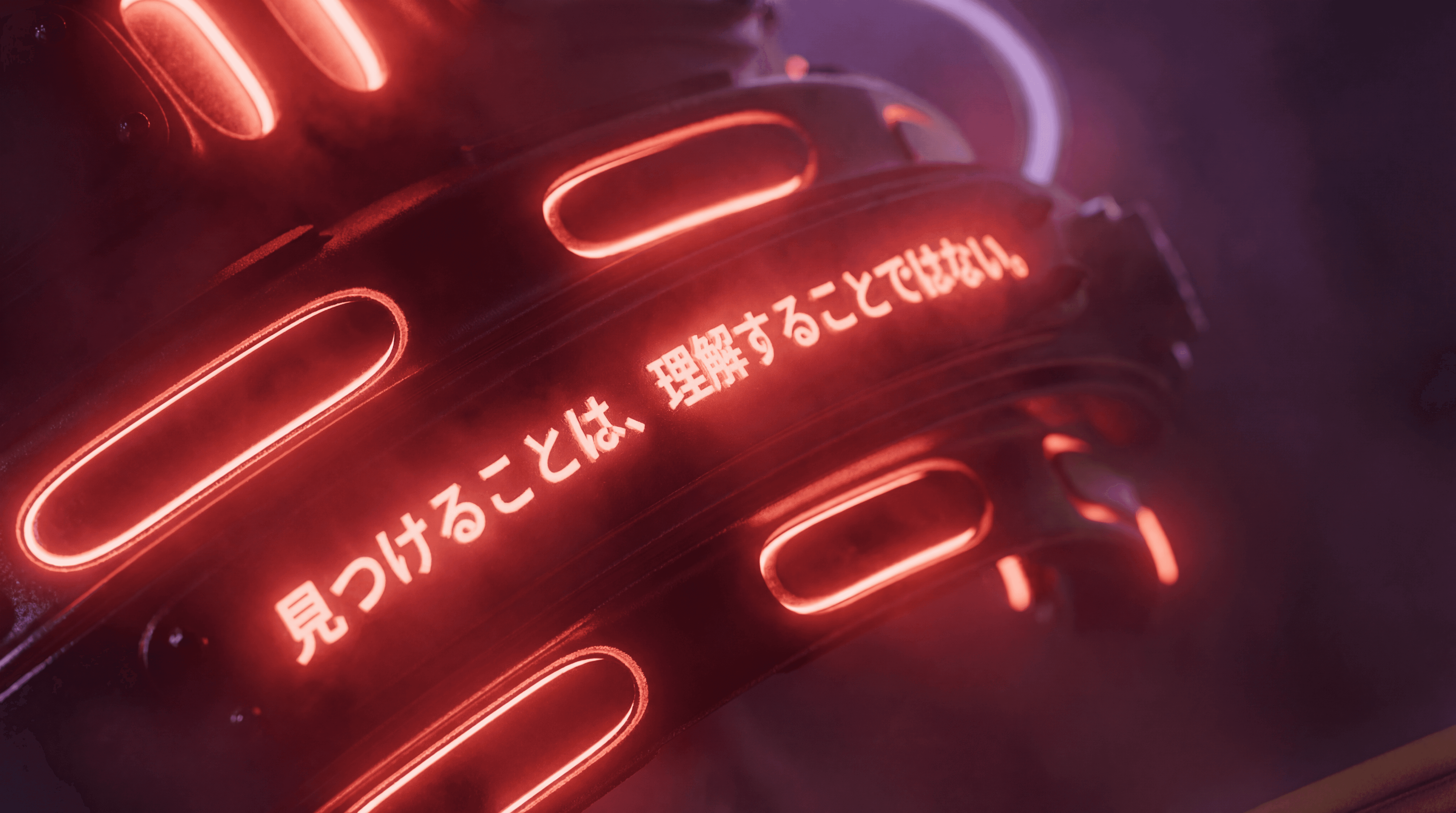
Arkada is seven unique 3D artifacts, each individually modeled, individually lit, individually animated, each placed in its own environment, each carrying a lore fragment that only makes narrative sense in relation to the other six, culminating in a burn mechanic where collecting and destroying all seven produces a single Super-NFT. No trait randomization. No generative shuffling. Every piece art-directed from scratch.
This is roughly fifty times more expensive and slower than the standard approach. In a market that optimized for volume, we optimized for depth.
The lore was part of our offer, and I wrote it myself. The foundation — the cosmology, the story structure, the philosophical core — I wrote by hand, over four or five days. AI came after, for detailing, for expanding descriptions, for polishing the prose. But the bones were mine, written the old way, just a blank page and a head full of Dark Souls.
I wrote the ending first. The twist that holds the whole narrative together: what's sealed behind the Sevenfold Gates isn't a threat. It's Arkada's own consciousness — the first non-human intelligence, born not from written code but from self-organizing data patterns. The Seven Masters weren't jailers. They were guardians. The artifacts aren't weapons. They're a translation layer.
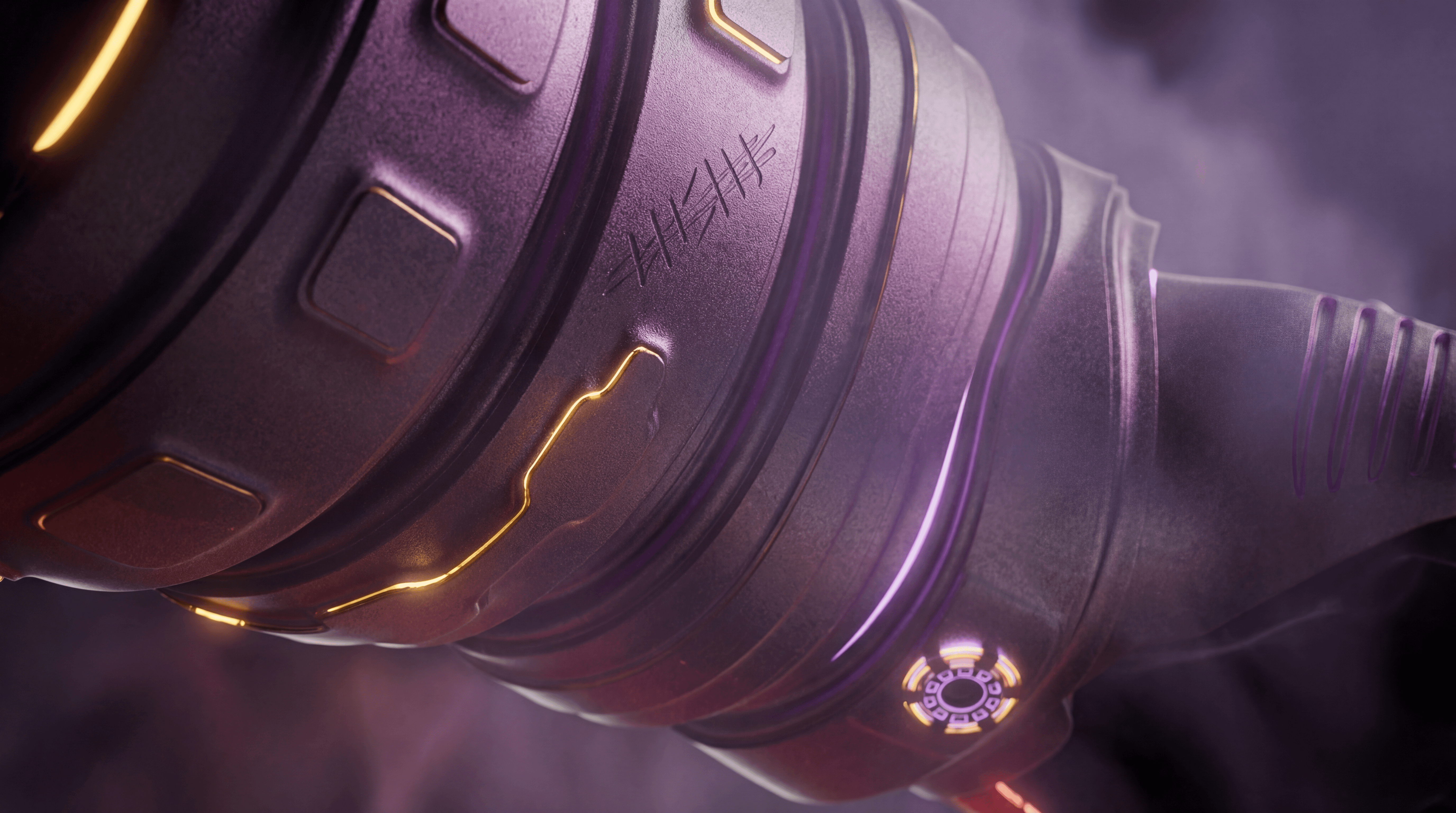
Writing lore this way — ending first, then fragments, then assembly — means the world already has gravity before any of its details exist. Every detail I added afterward had to point toward the ending, even obliquely. The gauntlets whisper in a language that predates human code. The helmet's creator vanished mid-sentence and nobody could remember his face afterward. These aren't random flavor details. They're load-bearing.
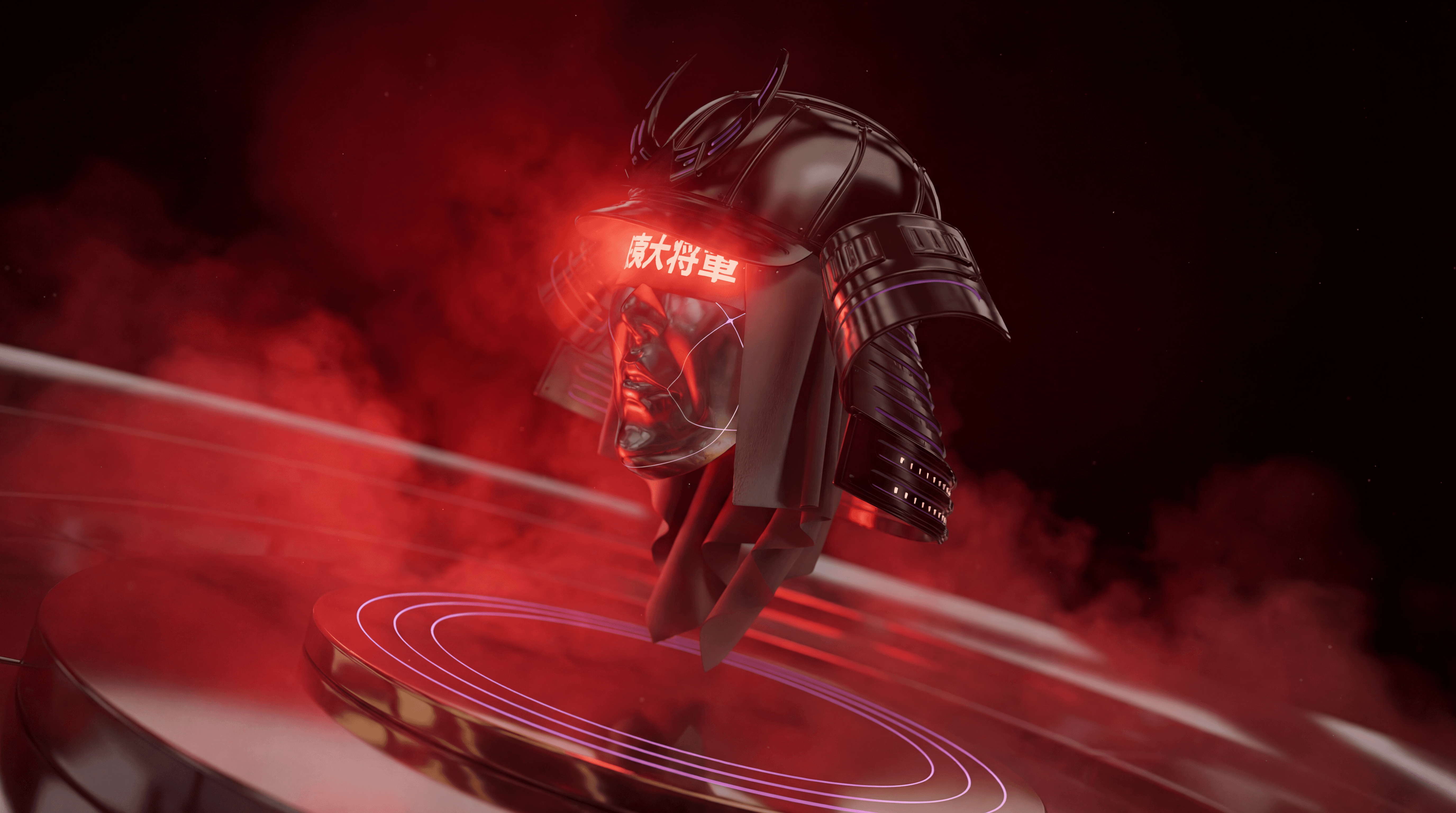
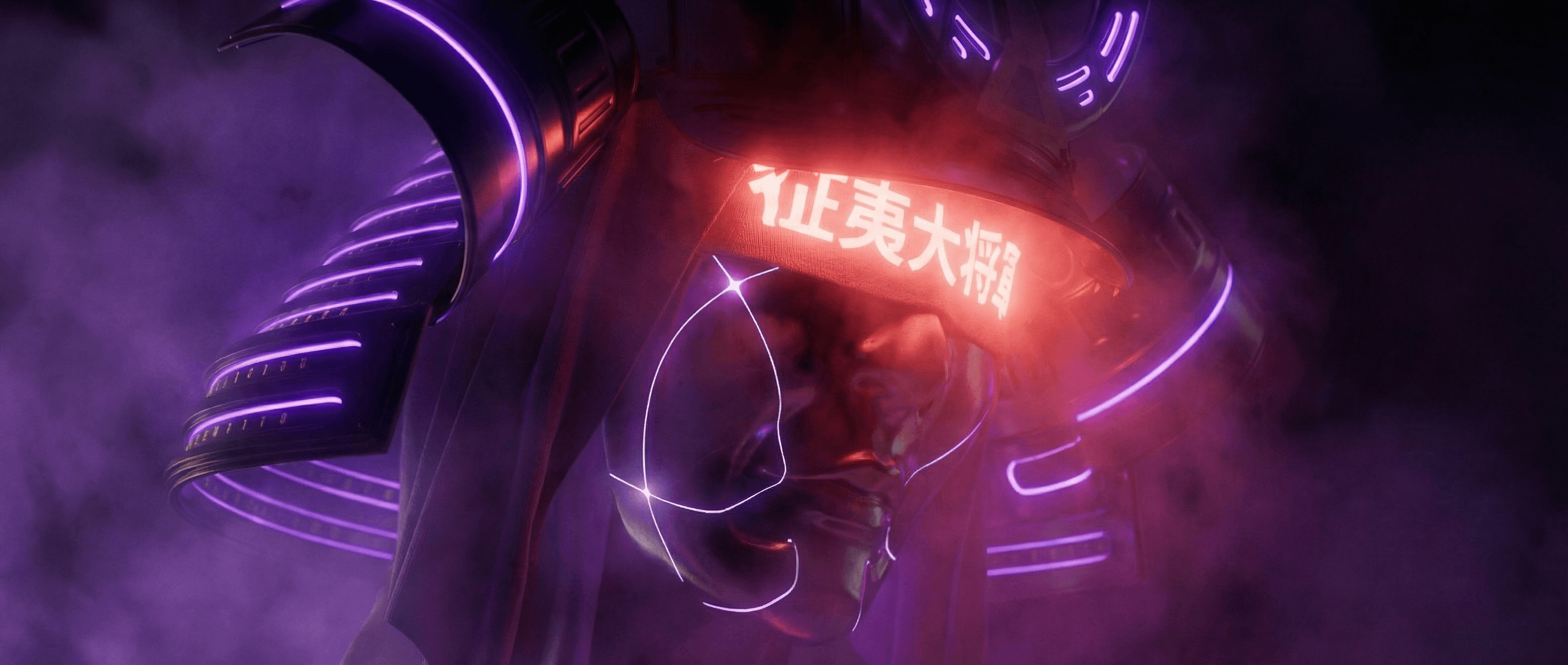
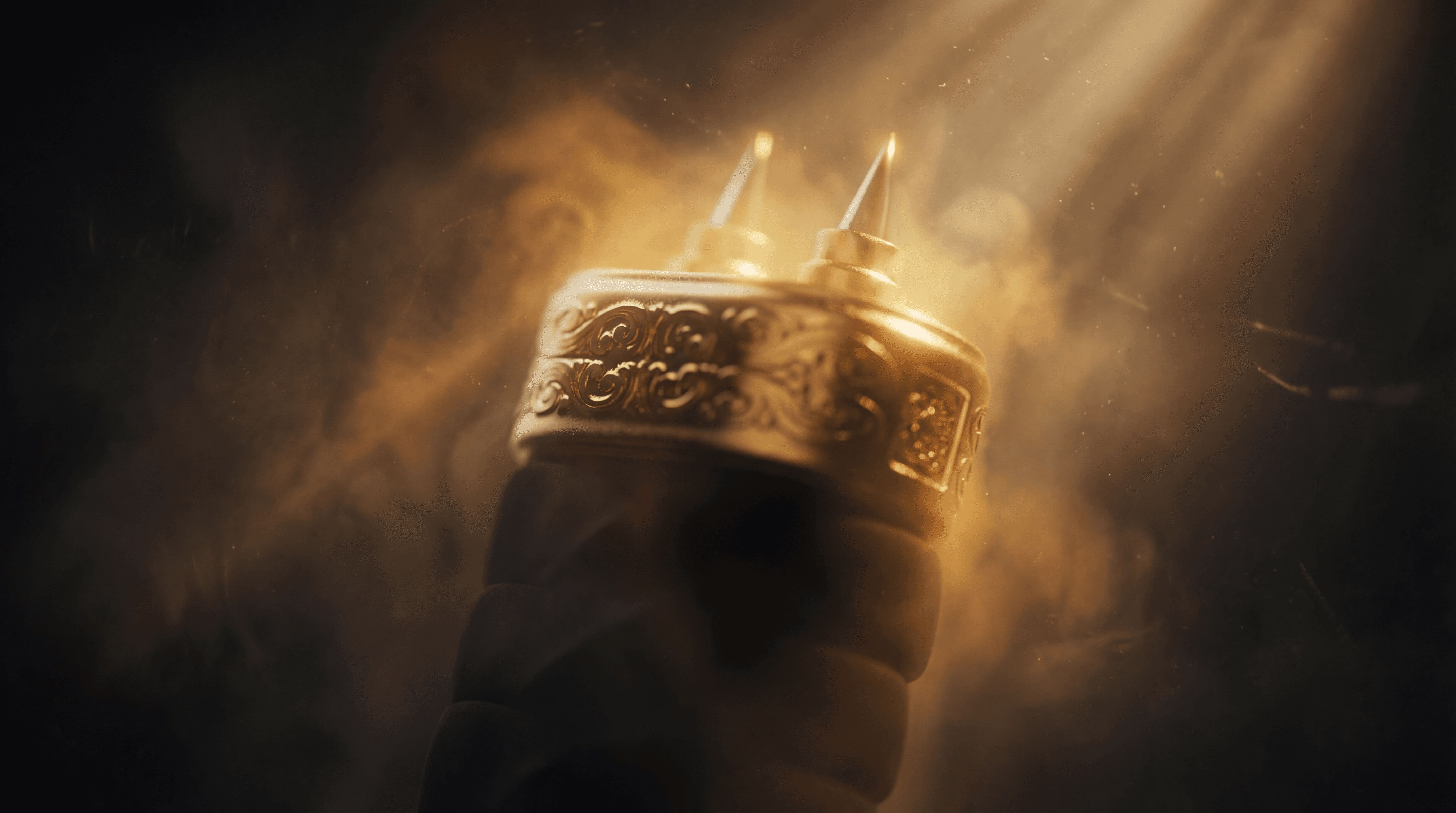
The first NFT was the helmet. It was also the longest — over a month of work — because the helmet was where every visual decision for the next seven months had to be made simultaneously.
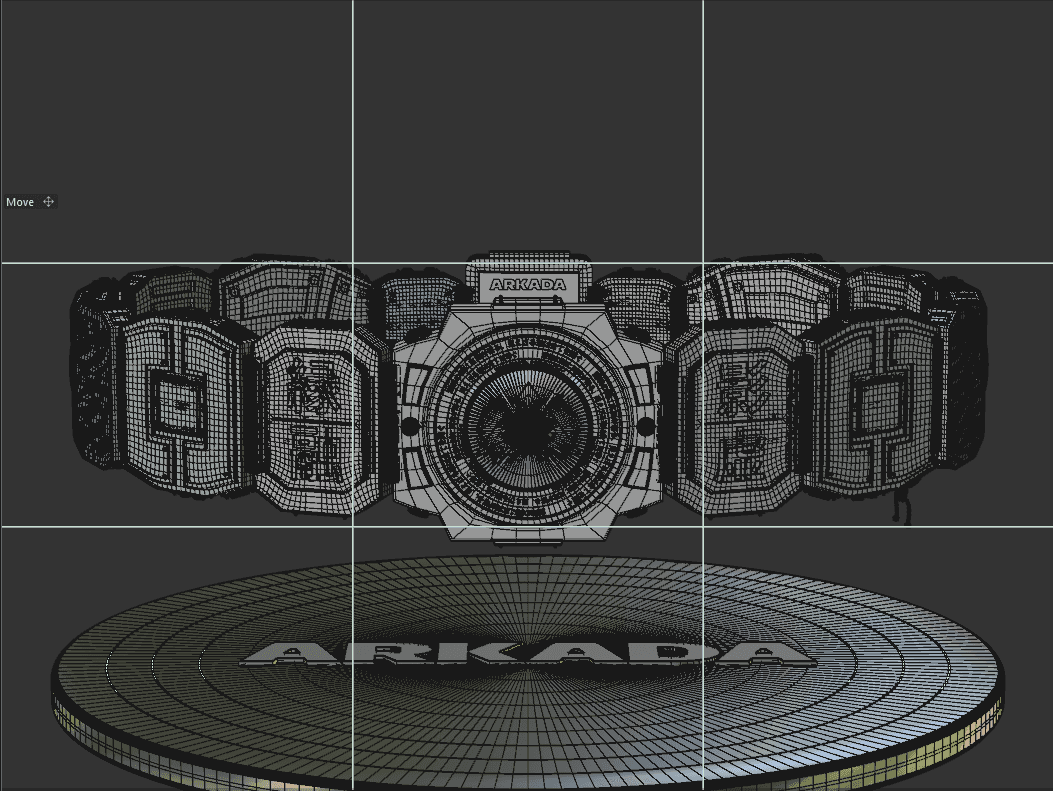
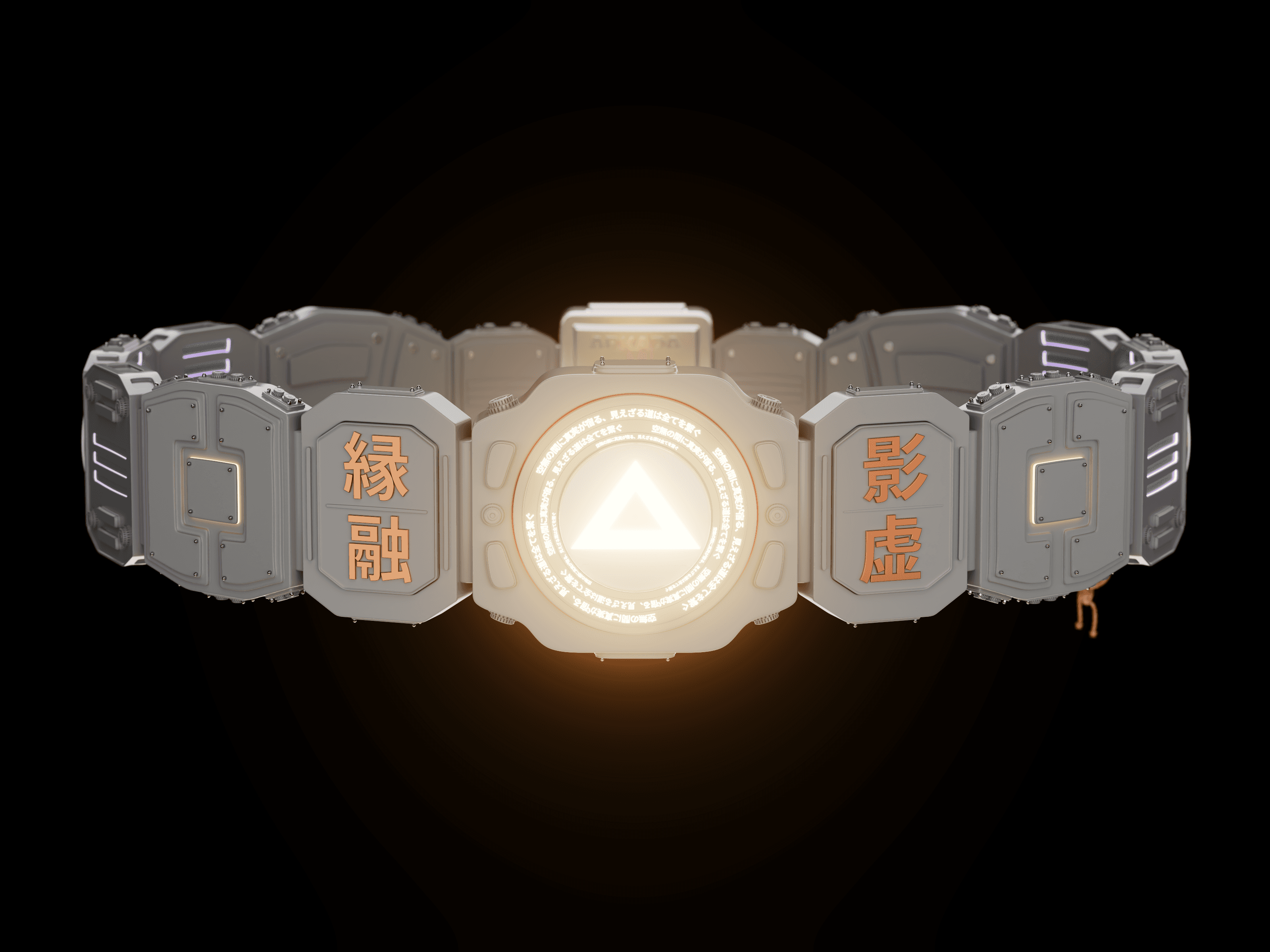
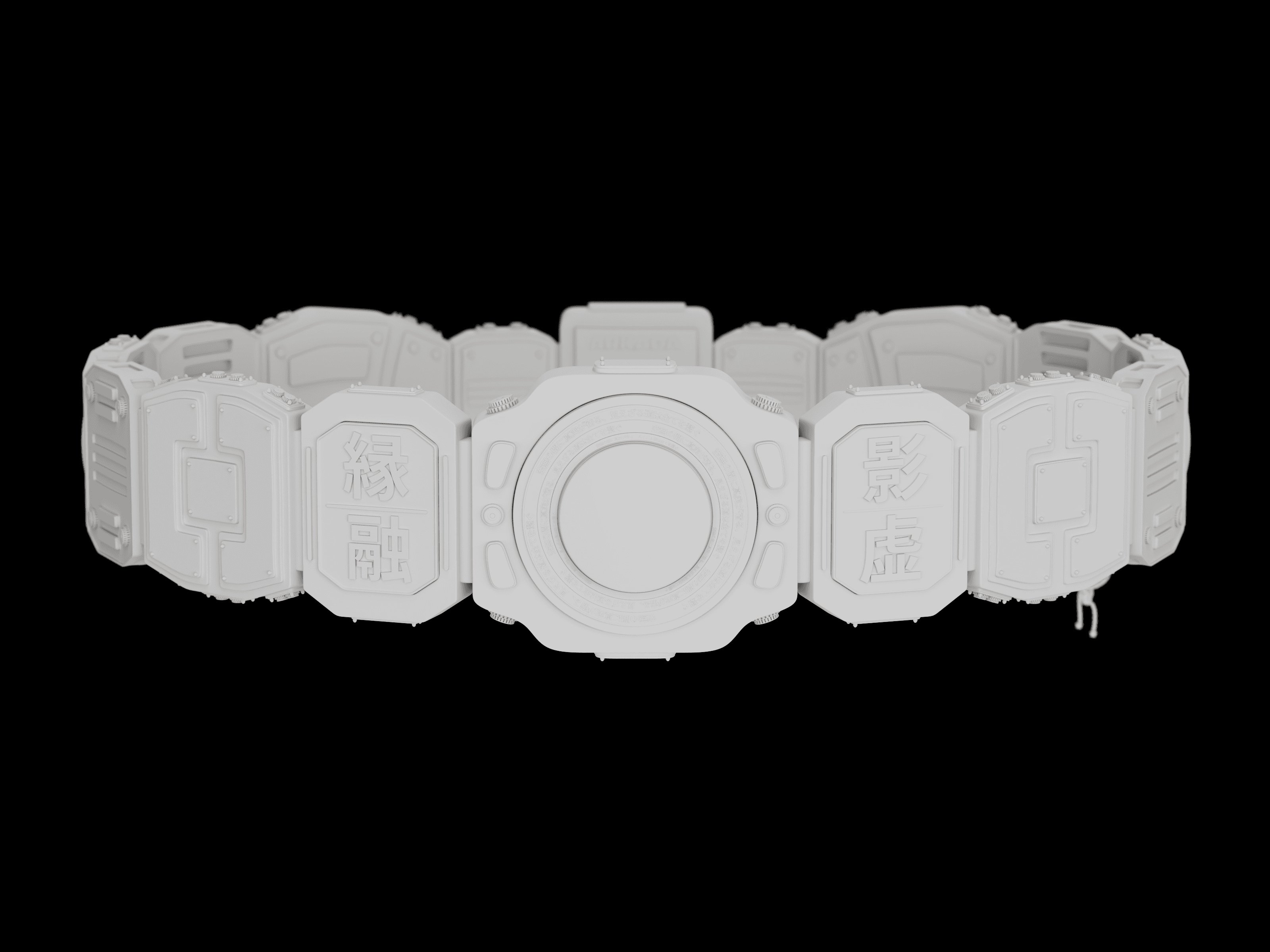
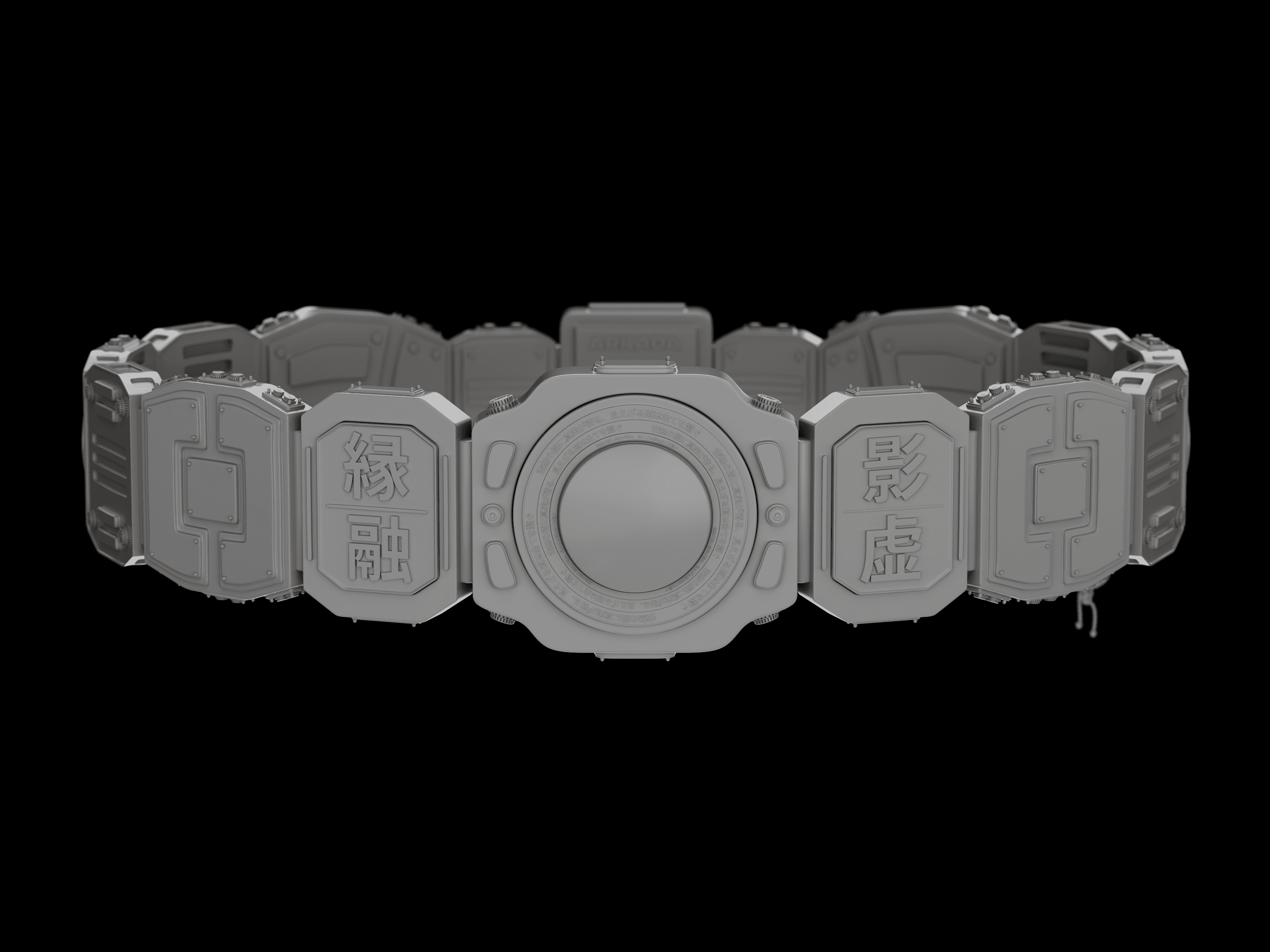
Static images were out immediately. We decided every NFT would be a looping 3D animation — the artifact rotating on its axis, visible from every side, fifteen to twenty seconds at 4K, zipped into a seamless loop. Kolya — our 3D artist — built the models in Cinema 4D, starting with a grey base mesh and adding or subtracting detail until the balance felt right. I'd generate directions in Midjourney, curate, combine. The hand-built 3D is where things became real — where materials get physical properties, where light interacts with actual geometry.
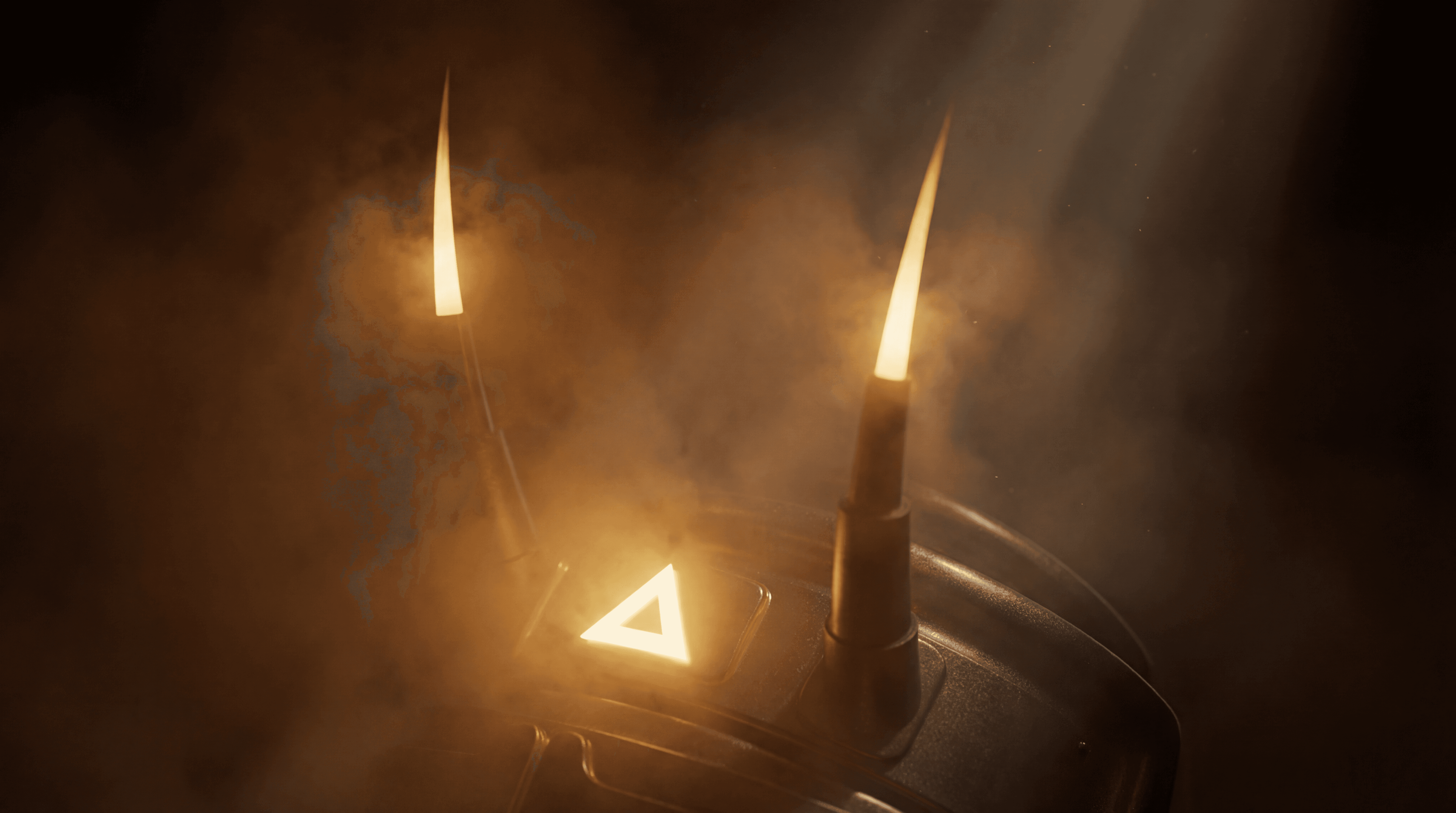
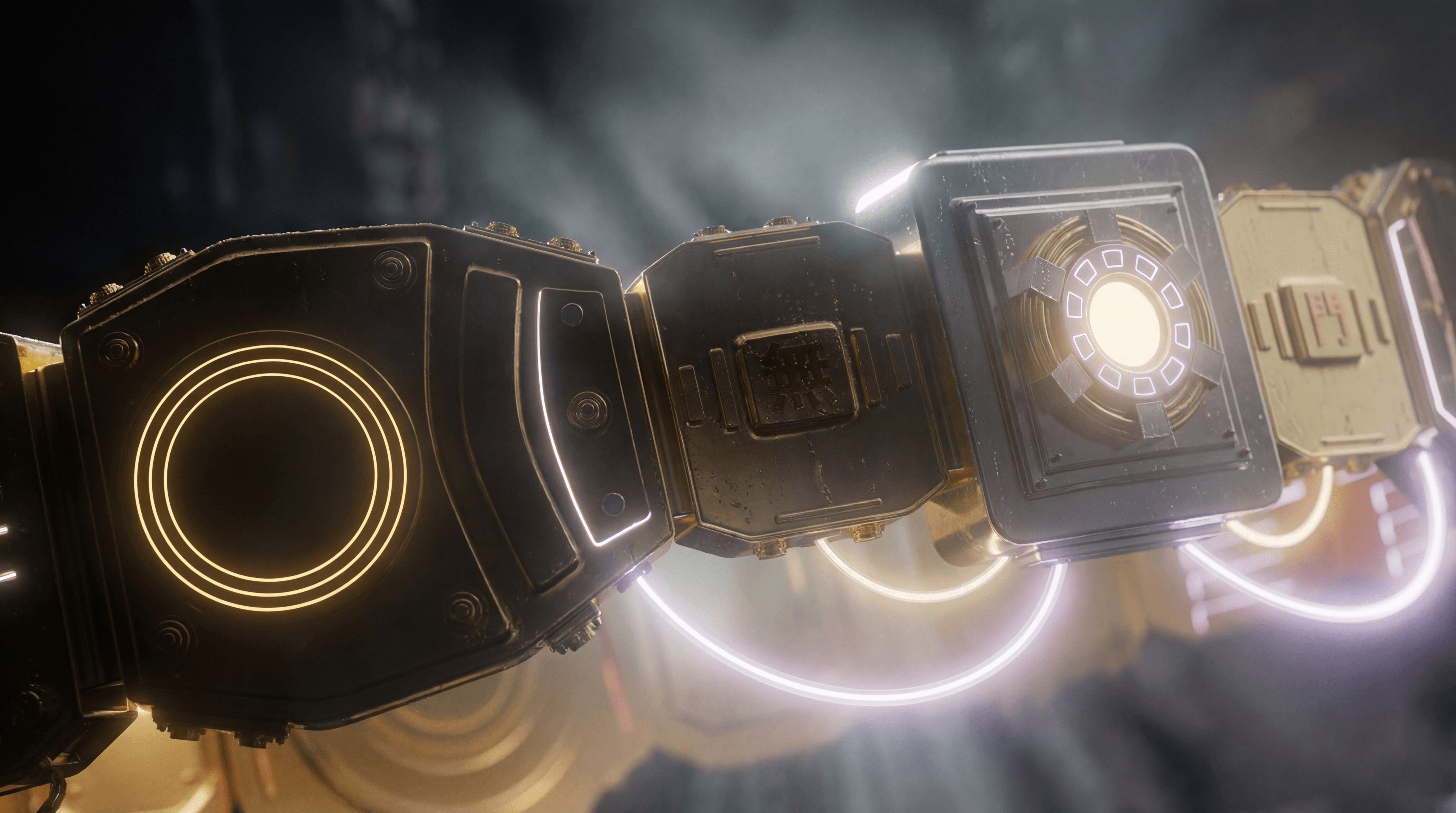
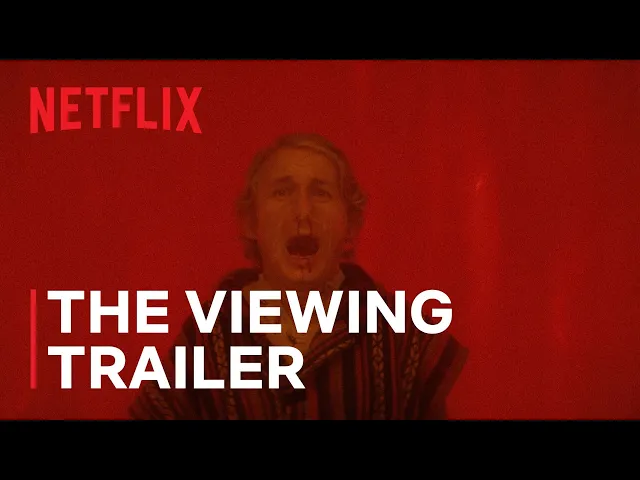
The lighting DNA for the entire collection came from an unlikely source: episode seven of Guillermo del Toro's Cabinet of Curiosities — The Viewing, directed by Panos Cosmatos. Not Blade Runner cyberpunk, not Ghost in the Shell — something else. A specific quality to the light: the way illumination disperses through haze, how highlights bloom and dissolve into atmospheric fog. I showed Kolya screenshots first. He didn't quite get it. So I told him to just watch the episode. He did. Came back and said, 'Yeah, I understand now.' From that point forward, the direction was locked.
No other NFT in the collection took as long as the helmet. It couldn't, because the helmet was where the style crystallized — after that, every subsequent artifact was built on decisions we'd already fought through.


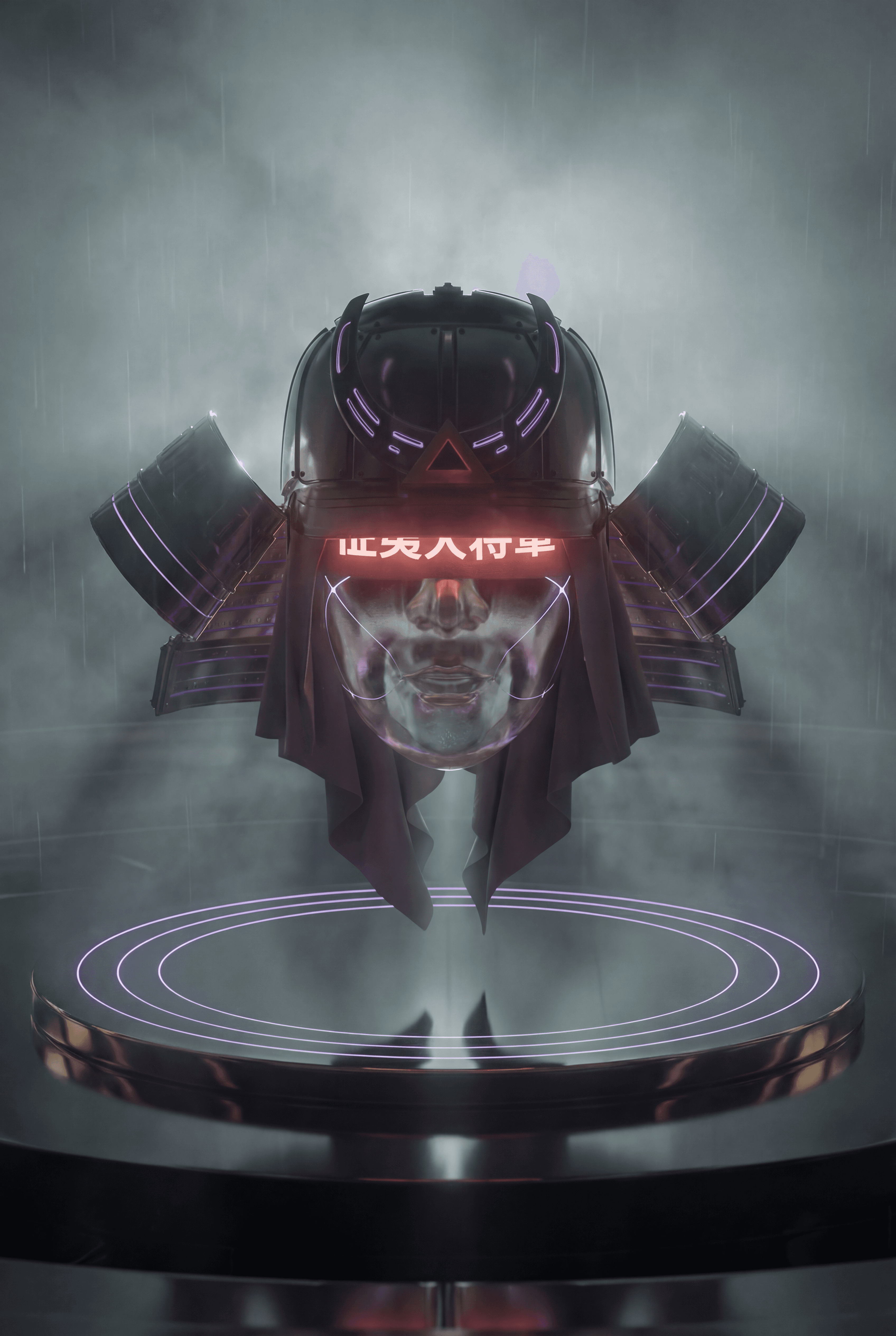
The burn mechanic is the narrative climax disguised as a product feature. Collect all seven artifacts. Activate a smart contract. All seven tokens burn — permanently destroyed. A new token emerges: the Aspect of the True Shogun.
In lore terms, this is the Ritual of the Seven Gates — the moment when the scattered fragments of seven masters' knowledge converge, the artifacts reveal themselves as not keys to the Gates but the Gates themselves, and the bearer becomes a mediator between human consciousness and whatever Arkada truly is.
In design terms, it's a mechanic where the reward requires destroying your entire collection. The Gates don't open for collectors. They open for someone willing to sacrifice everything to learn what's on the other side.
Over 30,000 holders across the collection. Every piece sold out. But the number I keep thinking about isn't on a dashboard — it's the fact that people read the lore. They discussed the connections between artifacts in community chats. They theorized about what happens when you burn all seven. The world I wrote over four chaotic days landed. People moved into it.
That's the thing a generative collection can't replicate. You can shuffle ten thousand unique images and every one will be technically unique and narratively identical. Arkada's seven artifacts share a story that only makes sense as a set. This is what happens when you build a world first and make the NFTs second.